Influencer Marketing Strategy in 2026: From Reach to Revenue
Influencer marketing has matured from vanity metric to measurable growth channel. Here's the complete framework for building creator partnerships that drive real revenue—with the right tiers, contracts, measurement, and AI-powered workflows.
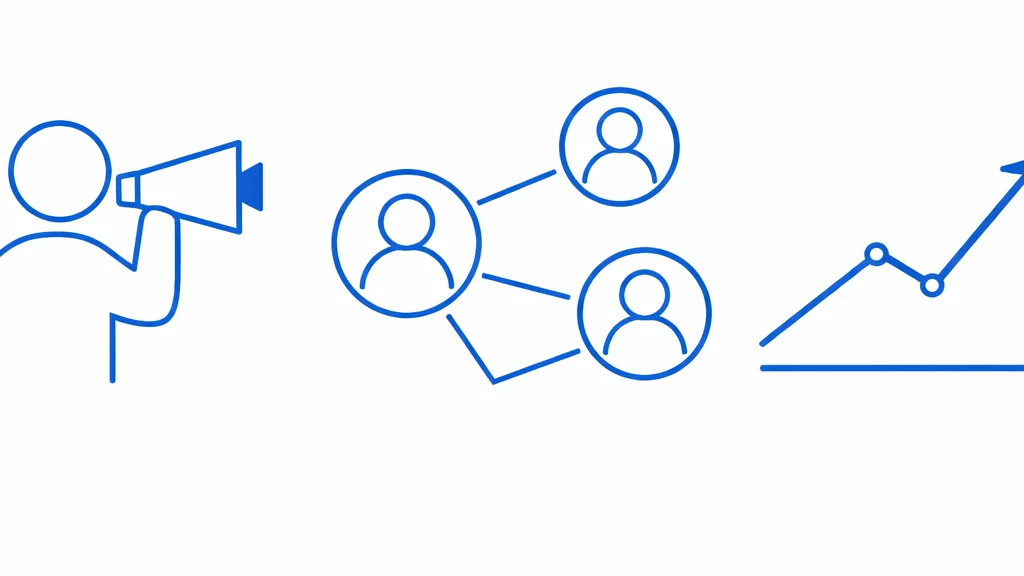
Influencer marketing used to be a brand awareness play dressed up in lifestyle content. In 2026, it’s a performance channel. The brands winning with creators aren’t the ones with the biggest budgets—they’re the ones with the best systems.
This guide covers everything you need to build an influencer program that drives measurable revenue, not just reach.
Why Influencer Marketing Belongs in Your Growth Stack
The creator economy now generates over $500 billion annually. More importantly, it’s evolved: today’s top creators function less like celebrities and more like niche media channels with highly engaged, trust-based audiences.
For brands, this creates a compound advantage. Creator content:
- Converts at 3–5x higher rates than brand-produced ads because of perceived authenticity
- Bypasses ad fatigue by appearing in organic feed contexts
- Generates UGC assets that can be repurposed across paid channels
- Builds brand equity in communities that banner ads never reach
The challenge isn’t access—there are millions of creators across every category. The challenge is building a system that consistently identifies the right creators, executes efficiently, and measures what actually matters.
The Creator Tier Framework
Not all influencers are equal. The right tier depends on your objective.
Nano (1K–10K followers)
Nano creators have the highest engagement rates (often 7–12%) and the strongest community trust. They’re ideal for hyper-local campaigns, niche product launches, and building authentic UGC at scale. Cost per post is low ($50–$500), making it viable to run 50–100 simultaneously.
Micro (10K–100K followers)
The highest ROI tier for most performance-focused brands. Micro creators combine meaningful reach with genuine niche authority. A fitness creator with 40K followers who exclusively covers strength training will outperform a lifestyle creator with 400K on the same protein supplement.
Macro (100K–1M followers)
Effective for brand launches and category education where reach matters more than conversion. Require tighter briefs and more coordination. Expect CPMs similar to paid social at $5–$20.
Mega/Celebrity (1M+)
Best for cultural moments, not conversion. Use sparingly, pair with strong retargeting, and evaluate on brand lift—not direct ROAS.
The 2026 reality: Most high-performing programs allocate 70% of budget to micro and nano creators, 20% to macro, and 10% to macro/celebrity moments.
How to Find Creators That Actually Convert
The biggest waste in influencer marketing is paying for reach that doesn’t convert. Here’s how we vet creators before any spend:
1. Audience quality over size
Request demographic breakdowns before signing. A fitness creator whose audience is 70% international students doesn’t match a domestic gym equipment brand. Tools like Modash, HypeAuditor, and Klear provide third-party audience data.
2. Engagement rate benchmarks
Average engagement by tier (2026):
- Nano: 6–12%
- Micro: 3–7%
- Macro: 1.5–3%
- Mega: 0.5–1.5%
Flag accounts that fall below tier benchmarks—often a sign of purchased followers or declining relevance.
3. Content-brand alignment
Don’t just check follower counts. Read the comments. Watch five recent posts. Ask: would your product appear naturally in this person’s feed? Forced integrations tank conversion rates regardless of audience size.
4. Prior brand performance
Many creators will share media kits with past campaign metrics. Ask for swipe-up rates, link-in-bio click data, or promo code redemption rates from previous partnerships. This is the single strongest predictor of future performance.
Campaign Structure: Always-On vs. Burst
Two approaches dominate modern influencer programs:
Always-On: A roster of 10–50 micro creators posting consistently every month. Lower cost per activation, compounds brand presence over time, generates steady UGC. Best for DTC brands, subscription products, and categories where trust builds slowly.
Burst Campaigns: Coordinating 20–200 creators around a launch window, seasonal moment, or cultural event. Creates coordinated social proof at scale. Best for product launches, seasonal peaks, and brand pivots.
Most mature programs run both: always-on micro creators for sustained presence, burst campaigns for major moments.
Measurement Framework: Beyond Views
The metrics that actually predict revenue impact:
Tier 1: Vanity (track but don’t optimize for)
- Impressions
- Views
- Follower growth
Tier 2: Engagement (leading indicators)
- Engagement rate
- Comment sentiment
- Save rate (especially on Instagram)
Tier 3: Performance (what matters)
- Swipe-up / link click rate
- Promo code redemptions
- Post-click conversion rate
- Revenue per creator
- Cost per acquisition (CPA) by creator
Tier 4: Business outcomes
- New customer acquisition from influencer cohort
- LTV of influencer-acquired customers vs. other channels
- Incrementality (holdout tests to isolate true lift)
Track tier 3 and 4 from day one. Brands that optimize on engagement alone often find no correlation with revenue.
The UGC Repurposing Engine
One of the highest-leverage moves in modern paid media: whitelisting and spark ads. Rather than just publishing creator content on their own channels, you use creator-produced content as paid ad creative.
Meta Whitelisting (Branded Content Ads): Run the creator’s post as a paid ad from their handle. Outperforms brand-page ads by 30–60% in most tests because of social proof (real followers, real comments visible).
TikTok Spark Ads: Boost creator’s organic posts with paid spend. Same principle—combines authentic social proof with performance targeting.
Native repurposing: Strip the creator footage and run as your own UGC-style creative. Works well for display, YouTube pre-roll, and email.
The implication: influencer content isn’t just an awareness play. It’s a creative production system for your entire performance marketing stack.
Brief Quality: The Most Underrated Lever
Most influencer campaigns underperform not because of the wrong creators, but because of vague or over-controlled briefs.
A brief should include:
- One core message (not three “key messages”)
- What to avoid (competitor mentions, sensitive topics, banned claims)
- Required elements (product shot, promo code, CTA)
- What to leave to the creator (literally everything else)
Experienced creators know their audience better than you do. Briefs that script every line kill the authenticity that makes creator content work. The best brief is the one that protects your brand while giving creators maximum creative freedom.
AI in Influencer Marketing
In 2026, AI has become central to how high-performing programs operate:
Creator discovery and scoring: AI tools (Modash, Influencity, Creator.co) now use ML to score creators on brand-fit, engagement quality, and predicted performance before the first outreach.
Brief generation: AI drafts initial briefs from campaign parameters, then humans refine for tone and specificity.
Content moderation: Automated brand safety checks flag problematic content before publication.
Performance prediction: Some platforms now predict post-launch performance within 20% based on creator history, brief quality, and audience overlap.
Campaign reporting: Automated dashboards pull data from Instagram, TikTok, YouTube, and affiliate systems into unified views that previously required hours of manual aggregation.
The brands using these tools systematically—not just as point solutions—run programs that are 3x more efficient than manual operations.
Common Mistakes and How to Avoid Them
Chasing follower counts: The creator with 800K generic followers will almost always underperform the creator with 80K hyper-engaged niche followers for a targeted product.
One-and-done campaigns: Trust builds with repeated appearances. A creator who posts about your product once is an ad. A creator who posts five times over six months becomes a credible advocate.
Ignoring legal compliance: FTC guidelines require clear disclosure. #ad or #sponsored is non-negotiable. Non-compliance creates brand risk that far outweighs any short-term performance benefit.
Paying per post with no performance incentives: The best creators want skin in the game. Hybrid deals (base fee + performance bonus on promo code revenue) align incentives and often outperform flat-fee structures.
Treating influencer and paid media as separate teams: Influencer and paid teams need to coordinate on creative assets, timing, and targeting. The brands that win run them as one integrated function.
Frequently Asked Questions
What budget do I need to start? You can run a meaningful nano/micro program from $2,000–$5,000/month. This funds 10–20 nano activations or 3–5 micro posts. The key is treating it as a test-and-learn channel at that stage.
How do I manage creator relationships at scale? Use a CRM built for influencer management (Grin, Aspire, Traackr). At scale, assign dedicated relationship managers who focus on top-performing creators.
Should I use an agency or build in-house? Build in-house once you hit $20K+/month in influencer spend. Below that, agencies provide better creator access and lower operational overhead.
How long before I see results? Performance metrics (promo code redemptions, traffic) are visible within 24–48 hours of a post. Brand equity and LTV impacts take 3–6 months to measure properly.
Influencer marketing in 2026 isn’t about finding the most famous creator for your category. It’s about building a systematic creator partnership engine—with the right tiers, clear briefs, performance incentives, and a feedback loop that makes every campaign smarter than the last.
Brands that treat it like a scalable performance channel, not a one-off activation, are the ones consistently outperforming on CAC and LTV.
Topics
Key Terms in This Article
CPM
Cost Per Mille (thousand impressions) – what you pay for 1,000 ad views.
CPA
Cost Per Acquisition – how much you pay to acquire one customer or conversion.
ROAS
Return On Ad Spend – revenue generated for every dollar spent on advertising.
ROI
Return On Investment – the profitability of your marketing investment.
LTV
Lifetime Value – the total revenue a customer generates over their entire relationship.
CAC
Customer Acquisition Cost – the total cost to acquire one new customer.
Need help turning this into a system?
Wieldr works with selected teams on strategy, paid media, measurement, creative testing, and AI-native marketing workflows.
Work with Wieldr