Lifecycle Email Marketing: The Complete Guide to Revenue-Generating Sequences
Lifecycle email marketing is the highest-ROI channel most brands underinvest in. Learn how to build triggered sequences—welcome, onboarding, nurture, retention, and win-back—that generate revenue on autopilot.
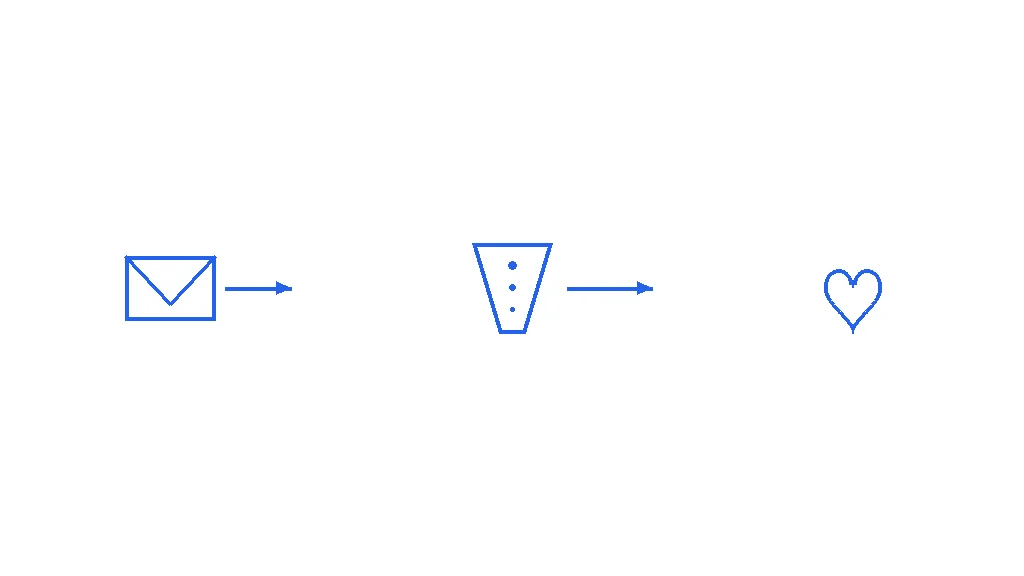
Email marketing generates an average return of $36 for every $1 spent. No other channel comes close. Yet most brands treat email as a broadcast tool—blasting promotions to their whole list—and leave the majority of that ROI on the table.
The difference between average email programs and exceptional ones isn’t list size or send frequency. It’s lifecycle design: the right message, to the right person, at the right moment in their journey.
This guide covers how to build lifecycle email sequences that convert at every stage—from first touch to long-term loyalty.
What Is Lifecycle Email Marketing?
Lifecycle email marketing is the practice of sending automated, behavior-triggered emails based on where a subscriber is in their customer journey. Unlike broadcast campaigns (sent to everyone at once), lifecycle emails are:
- Triggered by behavior: A purchase, a signup, 30 days of inactivity, a cart abandonment
- Personalized by segment: Different messages for new customers vs. long-term ones, B2B vs. B2C
- Sequenced for outcomes: Designed to move people from one stage to the next
The five core lifecycle stages are: Acquisition → Activation → Monetization → Retention → Win-back.
The 5 Essential Lifecycle Email Sequences
1. Welcome Series (Days 0–7)
The welcome series is the highest-performing email sequence in any program. Open rates routinely hit 50–60%—three times higher than typical campaign emails. Most brands waste this moment with a single “Thanks for signing up!” message.
A high-performing welcome series does three things:
- Establishes expectations: What will they receive, how often, why it’s worth their attention
- Delivers immediate value: A lead magnet, a key insight, a discount, or a useful resource
- Builds trust: Shows proof of results, introduces the team, shares your point of view
Recommended structure:
- Email 1 (immediate): Welcome + immediate value delivery
- Email 2 (Day 2): Social proof + best content or product highlights
- Email 3 (Day 4): Address a common objection or pain point
- Email 4 (Day 7): Soft conversion ask—trial, purchase, or booking
Optimize subject lines relentlessly here. A 10% improvement in welcome series open rates compounds across every subscriber’s entire lifecycle.
2. Onboarding Sequence (B2B/SaaS: Days 1–21)
For B2B companies and SaaS products, onboarding emails determine whether new users actually activate—or churn before seeing value.
The goal of onboarding email is not to explain features. It’s to drive the one action that correlates most with long-term retention (your “activation moment”). For Slack, that’s sending a message. For Dropbox, it’s uploading a file. For an agency tool, it’s completing the first project.
How to design onboarding flows:
- Define your activation moment (the action that predicts 60-day retention)
- Build emails that remove every barrier to reaching that moment
- Branch the sequence: users who activate get a different path than those who haven’t
Key triggers to build around:
- User signed up but hasn’t logged in within 24 hours → reminder email
- User logged in but hasn’t completed setup → “next step” prompt
- User completed key action → celebrate + suggest next milestone
- User inactive for 7 days → re-engagement with value reinforcement
3. Post-Purchase Nurture (E-commerce and D2C)
For e-commerce, the post-purchase email sequence is where lifetime value is made or lost. Most brands stop at the transactional confirmation email. High-performers build a full relationship sequence.
Post-purchase sequence architecture:
- Email 1 (immediate): Order confirmation with relevant cross-sell (products that pair with their purchase)
- Email 2 (Day 3): Pre-shipping anticipation email—builds excitement, reduces anxiety
- Email 3 (Day 7, post-delivery): Usage tips or setup guide; reduce buyer’s remorse
- Email 4 (Day 14): Ask for a review; this also surfaces satisfaction issues early
- Email 5 (Day 30): Replenishment or next logical purchase prompt
Brands that run a structured post-purchase sequence see 15–25% higher repeat purchase rates within 90 days compared to those that only send transactional emails.
4. Retention and Loyalty Emails
Retention email is the most underinvested sequence in most programs. The math is unambiguous: increasing customer retention by 5% increases profit by 25–95% (Bain & Company).
Effective retention email requires predictive triggers, not just calendar sends:
- Engagement drop signals: If a customer who used to open every email suddenly stops, that’s a churn signal—not a reason to send more
- Purchase cycle timing: If the average repurchase window is 45 days, trigger a “you might be running low” email at day 38
- Milestone celebrations: First anniversary, 10th order, VIP tier unlock—these emails strengthen identity and increase LTV
For subscription businesses, retention emails should address cancellation risk proactively. Monitor login frequency, feature adoption, and support tickets. When signals turn negative, trigger a “we noticed you haven’t been around” flow before the customer consciously considers canceling.
5. Win-Back Campaigns
The average email list decays at 22–25% per year. Subscribers become inactive. Customers lapse. A well-designed win-back sequence can recover 5–15% of lapsed contacts at a fraction of the cost of acquiring new ones.
What makes win-back emails work:
- Acknowledge the gap: “We miss you” is better than pretending nothing happened
- Lead with your best offer: Win-back is not the time for a gentle content email
- Create urgency: Limited-time discount or expiring loyalty points
- Sunset gracefully: If they don’t re-engage after 3–4 win-back attempts, remove them. Protecting deliverability is more valuable than holding dead addresses.
Win-back sequence template:
- Email 1: “We miss you” + your best offer
- Email 2 (3 days later): Last chance / urgency
- Email 3 (1 week later): “Should we let you go?” — often the highest converter in the series
Segmentation: The Multiplier
Lifecycle sequences perform better with segmentation. The minimum viable segments for most programs:
| Segment | Key Variable | Example Bifurcation |
|---|---|---|
| Engagement | Email open frequency | Active vs. at-risk vs. lapsed |
| Purchase history | Total orders | First-time vs. repeat buyer |
| Category preference | Products browsed/bought | Category A vs. Category B fans |
| Acquisition source | UTM / lead source | Paid vs. organic vs. referral |
| Customer value | LTV band | High-value vs. average vs. low |
You don’t need 50 segments. Five well-designed segments often outperform 50 poorly maintained ones.
Key Metrics to Track
Per sequence:
- Open rate (benchmark: 20–35% for lifecycle flows, 50%+ for welcome)
- Click-through rate (benchmark: 2–5% for most flows)
- Conversion rate (varies by goal: purchase, activation, review)
- Revenue per email sent
Program-level:
- Email-attributed revenue (last-click is misleading; use multi-touch)
- List growth rate vs. unsubscribe rate (net list health)
- Deliverability metrics: bounce rate (<2%), spam complaint rate (<0.08%)
Frequently Asked Questions
How many emails should be in a lifecycle sequence? There’s no fixed number. A welcome series works well with 3–5 emails. A SaaS onboarding might need 8–12. Let behavior dictate length: stop when users convert, reduce frequency for active engagers, increase for at-risk ones.
What platform should I use for lifecycle email? Klaviyo is the standard for e-commerce. HubSpot or Marketo for B2B with CRM integration. ActiveCampaign for SMBs needing flexibility. The tool matters less than the strategy—sophisticated flows can be built on most modern platforms.
How is lifecycle email different from email marketing automation? Lifecycle email is marketing automation, but focused specifically on the customer journey stages. Automation describes the technical mechanism; lifecycle describes the strategic logic.
How long does it take to see results? Welcome and post-purchase sequences produce measurable results within 2–4 weeks of deployment. Retention and win-back flows show impact within 60–90 days. The compound effect of a well-built lifecycle program shows up at 6–12 months in LTV data.
Lifecycle email marketing is one of the few channels where better strategy directly translates to revenue with minimal marginal cost. A brand with 50,000 email subscribers and well-designed lifecycle flows can generate the same email revenue as a competitor with 150,000 subscribers on a spray-and-pray strategy.
The investment is in thinking, not volume. Start with the welcome series and post-purchase flow—those two sequences alone typically account for 40–60% of email-attributed revenue—then build from there.
Key Terms in This Article
ROI
Return On Investment – the profitability of your marketing investment.
LTV
Lifetime Value – the total revenue a customer generates over their entire relationship.
CRM
Customer Relationship Management – software for managing customer interactions and data.
UTM
Urchin Tracking Module – parameters added to URLs to track campaign performance.
ARR
Annual Recurring Revenue – the yearly value of subscription revenue.
B2B
Business-to-Business – companies that sell products or services to other businesses.
Related Services
Need help turning this into a system?
Wieldr works with selected teams on strategy, paid media, measurement, creative testing, and AI-native marketing workflows.
Work with Wieldr