Marketing Channel Orchestration: The Complete Guide for 2026
Learn how to coordinate marketing channels for maximum impact. Master timing, sequencing, and cross-channel optimization to eliminate wasted spend and drive better results.
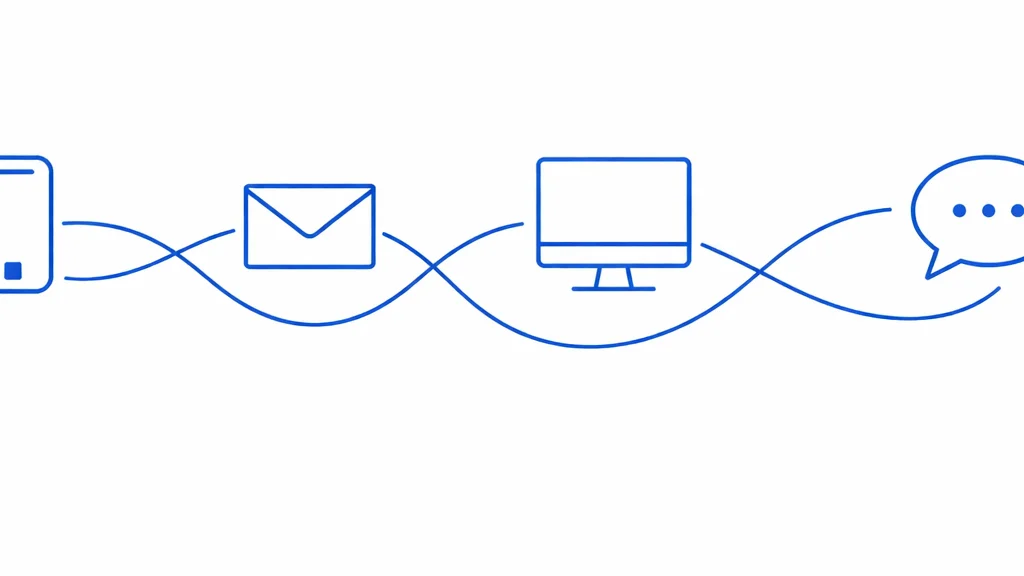
Most marketers think they’re running multi-channel campaigns. They’re not. They’re running multiple single-channel campaigns that happen to run at the same time.
Real channel orchestration means your channels work together—not just in parallel. It means Meta knows what LinkedIn is doing. Your email campaigns respond to paid social behavior. Your remarketing follows a coherent narrative across platforms.
The difference? Companies with true channel orchestration see 30-40% better ROI than those running siloed campaigns. Here’s how to get there.
What is Marketing Channel Orchestration?
Marketing channel orchestration is the strategic coordination of marketing activities across channels to create a unified customer journey. It’s not just running campaigns on multiple platforms—it’s making those platforms work together intelligently.
The difference matters:
- Multi-channel: Running LinkedIn ads AND Meta ads
- Orchestration: LinkedIn captures awareness, Meta nurtures consideration, email closes the deal—all timed and sequenced deliberately
Orchestration requires three things:
- Unified data across all channels
- Intelligent sequencing based on customer behavior
- Automated coordination that responds in real-time
Why Most Companies Fail at Orchestration
The problem isn’t lack of intention. Most marketers know orchestration matters. But three barriers stop them:
1. Data Silos
LinkedIn data lives in LinkedIn. Meta data lives in Meta. Your CRM has its own version of truth. Without unified data, orchestration is impossible. You’re coordinating blind.
2. Platform Limitations
Each ad platform wants to be your only platform. They optimize for their own metrics, not your business goals. Meta doesn’t care if LinkedIn already converted someone—it’ll keep serving ads.
3. Manual Complexity
Even with unified data, managing orchestration manually is impossible at scale. By the time you notice someone moved from awareness to consideration, they’ve already seen three irrelevant ads.
This is why AI-native orchestration isn’t a luxury—it’s the only viable path forward.
The Channel Orchestration Framework
Effective orchestration follows a four-layer framework:
Layer 1: Awareness Coordination
Don’t blast every channel at once. Sequence your awareness plays:
- Broad reach channels first (Meta, TikTok, display) to establish presence
- Professional/intent channels second (LinkedIn, Google Search) to capture warmed audiences
- Retargeting last to reinforce across all touchpoints
Why this order matters: Starting with intent channels (LinkedIn, Search) before awareness means you’re paying premium CPCs for cold audiences. Start cheap, move expensive.
Layer 2: Message Sequencing
Your messaging should evolve as prospects move through the funnel:
- Week 1: Problem awareness (“Are you struggling with X?”)
- Week 2: Solution education (“Here’s how companies solve X”)
- Week 3: Differentiation (“Why our approach is different”)
- Week 4: Conversion push (“See results in 30 days”)
Without orchestration, someone might see week 4 messaging before they’ve seen week 1. You’re asking for the sale before they know the problem.
Layer 3: Cross-Channel Suppression
The biggest waste in multi-channel marketing: showing ads to people who already converted.
Essential suppression rules:
- Suppress converters across all channels within 24 hours
- Suppress active pipeline (MQLs, SQLs) from prospecting campaigns
- Suppress by stage—someone in demo stage doesn’t need awareness content
Most companies suppress within channels. Orchestration suppresses across channels.
Layer 4: Adaptive Optimization
Orchestration isn’t just about planning—it’s about responding:
- If someone engages on LinkedIn but doesn’t convert, intensify Meta retargeting
- If email open rates drop, reduce email frequency and increase social presence
- If a channel drives awareness but not conversions, adjust its role in the mix
This requires real-time data flows and automated decision-making. Humans can’t react fast enough.
Channel Roles: Who Does What
Not all channels should do all things. Define clear roles:
Awareness Specialists
Meta, TikTok, Display, YouTube
- Broad reach at low CPMs
- Brand building and education
- Top-of-funnel volume generation
Metrics: Reach, video views, engagement rate, brand lift
Intent Capturers
Google Search, LinkedIn (with intent targeting)
- High-intent audiences actively searching
- Bottom-funnel capture
- Premium pricing, premium conversion rates
Metrics: Conversion rate, cost per acquisition, ROAS
Nurture Engines
Email, remarketing (Meta, LinkedIn, Google Display)
- Moving prospects through stages
- Staying top-of-mind
- Re-engaging stalled deals
Metrics: Progression rate, time-to-conversion, re-engagement rate
Channel Orchestration Rule: Match message to moment, not just channel.
Orchestration Patterns That Work
Three proven patterns for channel orchestration:
Pattern 1: Waterfall Retargeting
Start broad, get progressively more targeted:
- Meta/TikTok for cold awareness (30-day window)
- Google Display for warm consideration (14-day window)
- LinkedIn for hot prospects (7-day window)
- Email for immediate conversion push (3-day window)
Why it works: Increasing frequency and urgency as intent increases. You’re not wasting expensive channels on cold traffic.
Pattern 2: The Surround
Hit high-value targets from all sides simultaneously:
- LinkedIn sponsored content (professional context)
- Meta/Instagram (personal context)
- Google Search (active research)
- Email (direct communication)
When to use: ABM campaigns, high-value B2B targets, enterprise sales
Why it works: Creates “everywhere presence” that builds credibility and urgency
Pattern 3: Sequential Storytelling
Tell a coherent story across channels:
- Week 1 (Meta video): Customer pain point story
- Week 2 (LinkedIn article): Framework for solving the problem
- Week 3 (Email case study): How a similar company succeeded
- Week 4 (Retargeting across all): Free consultation offer
Why it works: Each touchpoint builds on the last. By week 4, they feel like they already know you.
Measuring Orchestration Effectiveness
Traditional channel metrics (CTR, CPC, ROAS) don’t capture orchestration value. You need new metrics:
Cross-Channel Path Analysis
What to measure: Which channel combinations drive conversions?
Example insights:
- LinkedIn → Meta → Email converts 3x better than direct paths
- Search alone has high ROAS, but Search + Display together is 40% higher
- TikTok rarely converts directly but assists 60% of Meta conversions
Time-to-Conversion by Path
What to measure: How does orchestration impact sales cycle length?
Example insights:
- Multi-touch orchestrated paths: 14 days average
- Single-channel paths: 28 days average
- Orchestration reduces time-to-conversion by 50%
Incremental Lift Testing
What to measure: What would happen without orchestration?
Method:
- Run orchestrated campaigns for Segment A
- Run independent campaigns for Segment B (matched audience)
- Compare conversion rates and CAC
Typical result: Orchestration lifts conversion rates 20-30% with same spend
Waste Elimination Metrics
What to measure: How much spend goes to already-converted users or mis-timed messages?
Calculate:
- Post-conversion ad impressions (wasted spend)
- Out-of-sequence impressions (wrong message at wrong time)
- Duplicate reach across channels (inefficient frequency)
Target: Reduce waste by 15-25% through better orchestration
How to Start Orchestrating Today
You don’t need perfect systems to start. Begin with these three moves:
Move 1: Unified Conversion Tracking (Week 1)
Set up conversion tracking that works across all channels:
- Server-side tracking for privacy compliance
- Shared conversion events across platforms
- CRM integration for full-funnel visibility
Impact: Finally see what’s working across channels, not just within them
Move 2: Basic Suppression Lists (Week 2)
Create and share suppression audiences:
- Weekly export of converters from CRM
- Upload to all ad platforms
- Exclude from prospecting campaigns
Impact: Eliminate 10-15% wasted spend immediately
Move 3: Sequential Campaign Structure (Week 3-4)
Restructure one campaign with deliberate sequencing:
- Create awareness, consideration, and conversion campaign sets
- Set up waterfall retargeting between them
- Define advancement criteria (engagement, time, behavior)
Impact: See 20-30% improvement in conversion rate for orchestrated segment
Advanced Orchestration: The AI Advantage
Manual orchestration gets you 70% of the way there. The last 30% requires automation:
Real-Time Decisioning
AI systems can:
- Detect when someone moves between stages
- Adjust messaging and frequency across channels within hours
- Reallocate budget to the channel mix that’s working for each segment
Human limit: Daily optimizations at best AI capability: Hourly adjustments across thousands of segments
Predictive Sequencing
Instead of fixed sequences, AI predicts the optimal next touchpoint:
- For this person, given their behavior, what channel/message will move them forward?
- Should we increase frequency or give them space?
- Which channel has the highest probability of conversion right now?
Result: Personalized orchestration at scale
Cross-Channel Attribution
AI can model true incrementality:
- What’s the marginal impact of adding channel X to the mix?
- How do channels interact to drive conversions?
- Where should we allocate the next dollar for maximum impact?
Traditional attribution: Last-click or linear rules AI attribution: Causal inference and incremental lift modeling
Common Orchestration Mistakes
Mistake 1: Over-Orchestrating
Not every customer needs a 12-touchpoint journey. Some are ready to buy on touchpoint 2. Build escape hatches for high-intent prospects.
Mistake 2: Forcing Symmetry
Not every channel needs equal weight. It’s okay if Meta does 70% of awareness and LinkedIn does 10%. Optimize for outcomes, not equal distribution.
Mistake 3: Ignoring Creative Consistency
Perfect orchestration means nothing if your creative looks completely different across channels. Visual and messaging consistency matters.
Mistake 4: Set-and-Forget Sequences
Customer behavior changes. Economic conditions shift. Winning orchestration patterns this quarter might not work next quarter. Test and iterate.
The Orchestration Maturity Model
Level 1: Multi-Channel (Siloed)
- Running campaigns on 3+ channels
- Separate budgets, separate optimization
- No coordination between channels
Level 2: Basic Coordination
- Shared conversion tracking
- Cross-channel suppression lists
- Consistent creative themes
Level 3: Strategic Sequencing
- Deliberate channel roles (awareness vs. conversion)
- Waterfall retargeting structures
- Message sequencing across channels
Level 4: Dynamic Orchestration
- Real-time budget reallocation
- Behavioral triggers for channel entry/exit
- Personalized sequences by segment
Level 5: AI-Driven Optimization
- Predictive next-best-action by individual
- Causal attribution modeling
- Autonomous optimization within guardrails
Most companies are at Level 1 or 2. Getting to Level 3 drives 30% better results. Levels 4-5 require automation.
The Bottom Line
Channel orchestration is the difference between good marketing and great marketing. It’s the difference between 50% wasted spend and efficient growth.
The companies winning in 2026 aren’t just running more channels—they’re running them together, intelligently, with AI handling the complexity humans can’t.
Start simple: unified tracking, suppression lists, basic sequencing. But don’t stop there. The gap between manual and automated orchestration will only widen.
Your move: Pick one campaign this week. Map out a deliberate sequence across three channels. Watch what happens when your channels finally work together.
Key Terms in This Article
CPM
Cost Per Mille (thousand impressions) – what you pay for 1,000 ad views.
CPC
Cost Per Click – the amount you pay each time someone clicks your ad.
CTR
Click-Through Rate – the percentage of people who click your ad after seeing it.
ROAS
Return On Ad Spend – revenue generated for every dollar spent on advertising.
ROI
Return On Investment – the profitability of your marketing investment.
CAC
Customer Acquisition Cost – the total cost to acquire one new customer.
Need help turning this into a system?
Wieldr works with selected teams on strategy, paid media, measurement, creative testing, and AI-native marketing workflows.
Work with Wieldr