Product-Led Growth: The Marketing Playbook for 2026
How to build a self-serve acquisition engine that scales through product experience, not sales teams. The complete PLG framework for modern B2B and SaaS.
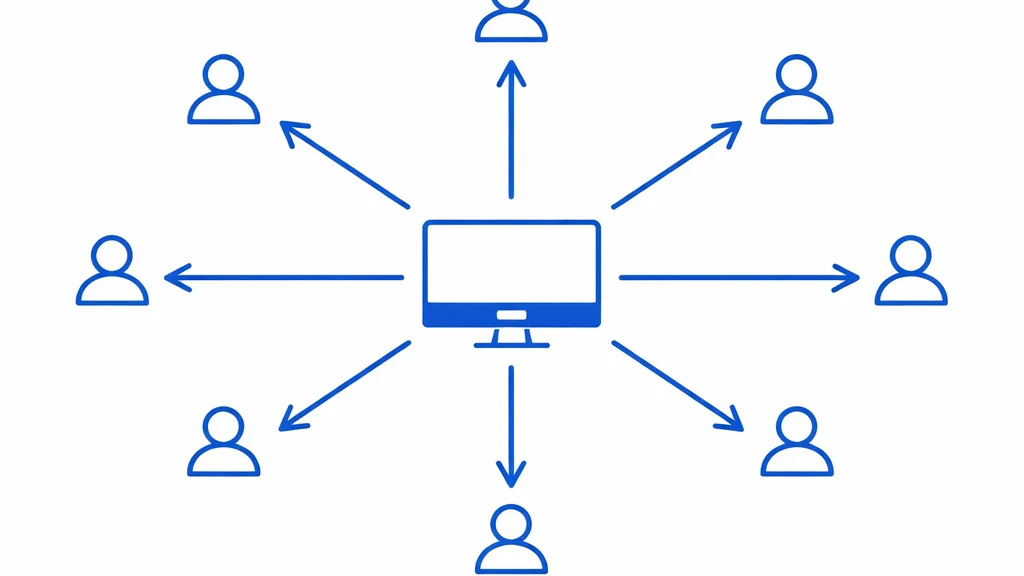
The shift from sales-led to product-led growth (PLG) is reshaping how B2B companies acquire and convert customers. In 2026, the companies winning market share are those that let their product do the selling.
Product-led growth means your product is the primary driver of customer acquisition, conversion, and expansion. Instead of gating everything behind demos and sales calls, you build a self-serve experience that delivers value immediately.
Why Product-Led Growth Works
Lower Customer Acquisition Cost: When your product drives acquisition, you eliminate expensive sales cycles. Users can discover, try, and buy without human intervention.
Faster Time to Value: PLG removes friction. Users experience your product’s core value within minutes, not weeks.
Viral Expansion: Great product experiences drive word-of-mouth. Users invite teammates. Teams invite departments. Departments become enterprise deals.
Compound Growth: Every user is a potential acquisition channel. Product-led companies grow exponentially, not linearly.
The Core PLG Principles
1. Free Entry Point
Create a genuinely useful free tier or trial. Not a neutered demo—a real product experience that solves a real problem.
What works:
- Generous free tier with core functionality (Slack, Notion)
- Time-limited full access (Superhuman, Linear)
- Feature-limited but complete workflow (Figma, Loom)
What doesn’t:
- 7-day trials that require credit cards upfront
- “Contact sales” walls for basic features
- Free tiers so limited they’re unusable
2. Instant Activation
Users should experience your product’s core value in their first session. Ideally within 5 minutes.
Reduce time to first value:
- Skip unnecessary setup steps
- Pre-populate with examples or templates
- Progressive onboarding (show features as they become relevant)
- One-click imports from competitors
Measure activation metrics:
- Time to first meaningful action
- Percentage of signups reaching “aha moment”
- Day 1, Day 7, Day 30 retention by cohort
3. Built-In Virality
Your product should create reasons for users to invite others.
Viral mechanisms:
- Collaboration features (Figma, Miro)
- Shared deliverables (Loom videos, Notion docs)
- Network effects (Slack channels, Linear projects)
- Referral incentives (Dropbox storage, credits)
Track viral metrics:
- Viral coefficient (how many new users each user brings)
- Time to first invite
- Invite acceptance rate
- Multi-user vs single-user retention
4. Product-Qualified Leads (PQLs)
Not all users are ready to buy. Identify which ones are based on product behavior, not demographics.
PQL signals:
- Usage frequency and depth
- Team size and growth
- Feature adoption patterns
- Hitting free tier limits
- Cross-workspace activity
When to engage sales:
- User shows enterprise intent (SSO questions, security docs)
- Team size crosses threshold (5+ users)
- High-value feature usage (integrations, admin controls)
- Sustained engagement over 30+ days
The PLG Marketing Funnel
Traditional funnels (Awareness → Consideration → Purchase) don’t work for PLG. Instead, think in layers:
Layer 1: Product Discovery
Where users find you:
- Organic search (SEO-optimized content)
- Community (Reddit, HN, Slack groups, Discord)
- Social proof (G2, Capterra, Twitter recommendations)
- Developer channels (GitHub, Stack Overflow)
- Product Hunt launches
Content strategy:
- Answer real problems, not product features
- Show, don’t tell (screenshots, demos, walkthroughs)
- Build in public (roadmap, changelog, metrics)
Layer 2: Self-Serve Signup
Optimize the signup flow:
- Email + password (Google/GitHub OAuth as alternative)
- Collect minimum information upfront
- No credit card for free tier
- Email verification after first value, not before
A/B test relentlessly:
- Signup form fields
- Onboarding question sequence
- First-run tutorial vs empty state
- Pre-populated templates vs blank canvas
Layer 3: Activation & Retention
Drive early engagement:
- Behavioral email sequences (triggered by inactivity)
- In-app prompts for next steps
- Success metrics dashboard (show progress)
- Personalized recommendations
Retention tactics:
- Weekly summary emails (usage stats, team activity)
- Feature announcements (via changelog + in-app)
- Educational content (tips, use cases, best practices)
- Community access (Slack, forum, events)
Layer 4: Expansion & Monetization
Natural upgrade triggers:
- Usage limits (file storage, seats, API calls)
- Advanced features (admin controls, integrations, SSO)
- Collaboration needs (team workspaces, permissions)
- Support SLAs (priority access, dedicated success)
Pricing strategy:
- Value metric pricing (per seat, per project, per usage)
- Clear upgrade paths (Starter → Pro → Enterprise)
- Transparent pricing (no “contact sales” until Enterprise)
- Annual discounts (15-20% off)
The PLG Tech Stack
Analytics & Insights:
- Product analytics: Amplitude, Mixpanel, PostHog
- Session replay: FullStory, LogRocket, Hotjar
- User feedback: Pendo, Chameleon, Appcues
Growth Automation:
- Email sequences: Customer.io, Loops, Resend
- In-app messaging: Intercom, Crisp, Plain
- Feature flags: LaunchDarkly, PostHog, Flagsmith
Attribution & Optimization:
- Multi-touch attribution: Segment, RudderStack
- A/B testing: Optimizely, GrowthBook, Statsig
- Conversion tracking: Google Analytics 4, Plausible
Common PLG Mistakes
1. Too much friction upfront: Every form field, every email verification, every setup step reduces activation.
2. Weak free tier: If your free tier doesn’t solve a real problem, users won’t upgrade—they’ll leave.
3. No virality: Single-player products have no compounding growth. Build for teams, not individuals.
4. Ignoring activation: Signups mean nothing. Activated users mean everything.
5. Late monetization: Don’t wait until you have millions of users. Test pricing early and often.
6. Sales-led mindset: PLG requires a different org structure. Product, growth, and marketing need to be tightly integrated.
PLG + Sales: The Hybrid Model
Pure PLG works for SMB and mid-market. But for enterprise, you need sales.
The hybrid approach:
- Self-serve for <$10K ARR
- Product-qualified handoff for $10-50K
- Sales-led for $50K+ and enterprise
When to add sales:
- Complex procurement (multi-stakeholder)
- Custom pricing (volume discounts, multi-year)
- Security/compliance needs (SOC 2, SSO, SLAs)
- Implementation support (onboarding, training, CSM)
Measuring PLG Success
Acquisition metrics:
- Organic signups per week
- Signup → activation rate
- Viral coefficient
- CAC by channel
Activation & engagement:
- Time to first value
- Day 1/7/30 retention
- Weekly/monthly active users
- Feature adoption rate
Monetization metrics:
- Free → paid conversion rate
- Time to first payment
- Expansion revenue (upsells, add-ons)
- Net revenue retention (NRR)
Efficiency metrics:
- CAC payback period
- LTV:CAC ratio
- Magic number (ARR growth / sales+marketing spend)
- Rule of 40 (growth rate + profit margin)
The PLG Competitive Advantage
Product-led companies scale faster and more efficiently than sales-led competitors. They acquire customers at lower cost, activate them faster, and retain them longer.
In 2026, the question isn’t whether to adopt PLG—it’s how quickly you can shift your organization to product-led thinking.
Build a product so good it sells itself. Then make it free to try, fast to value, and viral by design.
That’s product-led growth.
Key Terms in This Article
LTV
Lifetime Value – the total revenue a customer generates over their entire relationship.
CAC
Customer Acquisition Cost – the total cost to acquire one new customer.
API
Application Programming Interface – how different software systems connect and share data.
SEA
Search Engine Advertising – same as SEM, primarily used in Europe.
PPC
Pay-Per-Click – advertising where you pay only when someone clicks your ad.
ARR
Annual Recurring Revenue – the yearly value of subscription revenue.
Need help turning this into a system?
Wieldr works with selected teams on strategy, paid media, measurement, creative testing, and AI-native marketing workflows.
Work with Wieldr