The Account-Based Marketing (ABM) Playbook for 2026
Account-based marketing isn't just for enterprise anymore. Learn how B2B companies at every stage are using ABM to increase deal sizes, shorten sales cycles, and improve win rates—with practical strategies and real frameworks.
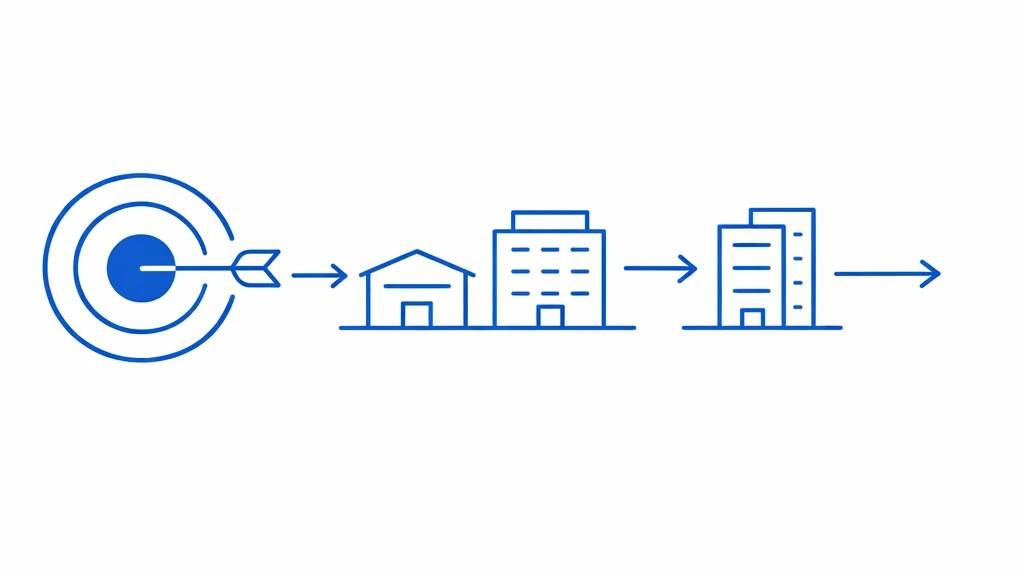
Most B2B marketing wastes money talking to the wrong people. You pour budget into broad campaigns, hoping to catch a few qualified leads in a wide net. The conversion rates are terrible, sales complains about lead quality, and deals take forever to close.
Account-based marketing (ABM) flips this model. Instead of casting a wide net, you identify the exact companies you want to win—and build focused campaigns to engage decision-makers at those accounts. The result: higher deal sizes, shorter sales cycles, and dramatically better win rates.
In 2026, ABM isn’t just for enterprise software companies with million-dollar contracts. Companies at every stage—from Series A startups to mid-market SaaS businesses—are using ABM frameworks to grow more efficiently.
Key Takeaways
- ABM delivers 2-3x higher deal sizes and 20-40% faster sales cycles compared to traditional demand gen
- You don’t need enterprise budgets—effective ABM can start with 50-100 target accounts and $10-15K/month
- Success requires tight sales-marketing alignment; ABM fails when teams operate in silos
- LinkedIn, personalized email, and intent data are the three core channels for modern ABM
- AI-powered personalization makes 1-to-1 ABM scalable for the first time
What Is Account-Based Marketing?
Account-based marketing is a strategic approach where marketing and sales treat individual target accounts as markets of one. Instead of generating thousands of leads and filtering for fit, you identify ideal accounts upfront—then coordinate across teams to engage decision-makers at those specific companies.
Traditional B2B marketing:
- Generate leads through broad campaigns
- Qualify leads with MQL criteria
- Hand qualified leads to sales
- Sales works accounts individually
Account-based marketing:
- Sales + marketing agree on target accounts
- Build account-specific campaigns and content
- Engage multiple stakeholders simultaneously
- Coordinate outreach across channels
The difference is precision over volume. You’re not trying to fill the funnel—you’re trying to win specific accounts that match your ideal customer profile (ICP).
Why ABM Works Better in 2026
The Shift to Intent-Based Buying
B2B buyers don’t wait for your cold email anymore. According to Gartner, 77% of the buying process happens before a prospect ever talks to a vendor. They research anonymously, compare alternatives, and build consensus internally before entering your pipeline.
ABM meets buyers where they already are—by showing up consistently across channels before they’re ready to buy. When they finally raise their hand, you’re already top-of-mind.
Better Data + AI = Scalable Personalization
Five years ago, true 1-to-1 ABM required manual research and custom content for every account. That didn’t scale beyond a handful of tier-1 targets.
In 2026, AI-powered tools make personalization scalable:
- Intent data identifies accounts actively researching your category
- Marketing automation sequences adapt based on engagement
- AI generates account-specific content and messaging at scale
- Real-time attribution shows which touchpoints drive pipeline
You can now run personalized campaigns for hundreds of accounts with the effort that used to support 10-20.
Sales Cycles Are Compressing
When you coordinate across channels to engage multiple stakeholders simultaneously, deals move faster. Research from ITSMA shows ABM programs deliver 20-40% shorter sales cycles compared to traditional lead gen.
Why? Because you’re not waiting for a single lead to champion your solution internally. You’re building awareness and credibility with the entire buying committee at once.
The Three Tiers of ABM
Not all accounts get the same level of focus. Effective ABM programs segment target accounts into tiers:
Tier 1: Strategic ABM (1-to-1)
10-25 accounts | Highest deal value | Fully customized
These are your dream accounts—the deals that would transform your business. For each account:
- Deep account research (org structure, tech stack, recent news, key initiatives)
- Custom content and campaigns for specific personas
- Direct executive engagement (CEO/VP-level intro calls)
- Personalized gifting and events
Budget allocation: 40-50% of ABM budget
Typical ACV: $100K-$1M+
Tier 2: ABM Lite (1-to-few)
50-200 accounts | Clustered by vertical or use case | Semi-personalized
Group accounts by industry, use case, or buyer persona. Build campaigns that feel personalized but scale across the cluster:
- Industry-specific landing pages and case studies
- Vertical-focused LinkedIn campaigns
- Automated but contextual email sequences
- Account-specific retargeting
Budget allocation: 30-40% of ABM budget
Typical ACV: $25K-$100K
Tier 3: Programmatic ABM (1-to-many)
500-2000 accounts | Lower touch, data-driven | Automated personalization
These accounts match your ICP but don’t warrant deep customization. Use intent signals and automation to engage at scale:
- Broad LinkedIn Matched Audiences
- Generic but high-quality content
- Automated outreach based on engagement
- Display advertising to key personas
Budget allocation: 20-30% of ABM budget
Typical ACV: $10K-$25K
The key insight: not every account deserves equal investment. Match effort to opportunity.
Building Your ABM Target Account List
ABM lives or dies on account selection. Go after the wrong companies and nothing else matters.
Step 1: Define Your Ideal Customer Profile (ICP)
Start with your best existing customers. What do they have in common?
Firmographic criteria:
- Industry / vertical
- Company size (employees or revenue)
- Geography
- Technology stack
- Funding stage (for startups)
Behavioral signals:
Growth indicators:
- Recent funding
- Hiring velocity
- Market expansion
- New executive hires
Step 2: Add Intent and Engagement Data
Layer in signals that indicate buying readiness:
- Intent data: Companies researching your category (6sense, Bombora, Clearbit Reveal)
- Website visitors: First-party data on who’s engaging with your content
- LinkedIn engagement: Accounts interacting with your posts and ads
- Competitive intelligence: Companies evaluating competitors
Step 3: Get Sales Buy-In
This is non-negotiable. Marketing can’t build an ABM list in a vacuum.
Schedule a joint session with sales leadership:
- Review ICP criteria
- Sales nominates must-win accounts
- Marketing adds data-driven suggestions
- Agree on final target list and tier assignments
If sales doesn’t co-own the account list, they won’t prioritize ABM leads when they come in.
The ABM Channel Stack for 2026
Effective ABM requires orchestration across multiple channels. Here’s what works:
1. LinkedIn (Primary Channel)
LinkedIn is the backbone of modern B2B ABM. Targeting options let you reach specific companies, job titles, and seniority levels with precision.
Key tactics:
- Matched Audiences: Upload your target account list and serve ads directly to employees
- Thought leadership content: Build credibility before asking for meetings
- LinkedIn Ads: Sponsored Content, InMail, and Dynamic Ads to key personas
- Employee advocacy: Train your team to engage with target accounts organically
Budget guidance: Allocate 40-50% of paid media budget to LinkedIn for ABM programs.
2. Email (High-Touch Outreach)
Email still works—but only when it’s genuinely personalized.
What doesn’t work: Generic “I wanted to reach out…” templates
What works:
- Reference specific triggers (funding news, job changes, company announcements)
- Tie your message to their business priorities (found via research)
- Multi-threaded campaigns (engage 3-5 stakeholders per account)
- Sequence based on engagement (if they open but don’t reply, adjust next message)
Use tools like Outreach, SalesLoft, or Apollo to automate sequencing without losing personalization.
3. Intent Data + Website Personalization
Know who’s researching before they tell you:
- Intent monitoring: Tools like 6sense and Bombora track when target accounts research your category
- Website identification: Clearbit Reveal, Demandbase, or HubSpot identify visiting companies
- Dynamic content: Show account-specific messaging, case studies, or CTAs based on visitor company
When a target account visits your site, your SDRs should know within minutes.
4. Display Advertising (Remarketing + Awareness)
Display ads keep you top-of-mind across the web:
- Account-based retargeting: Show ads to visitors from target accounts after they leave your site
- IP targeting: Serve ads to specific company IP ranges (works best for large enterprises with office networks)
- Programmatic platforms: Use RollWorks, Demandbase, or 6sense for ABM-specific display
Pro tip: Combine display with LinkedIn for multi-channel frequency. Seeing your brand in multiple contexts builds credibility faster.
5. Events (Virtual + In-Person)
High-value accounts deserve face time:
- Executive dinners: Small, curated gatherings for C-level prospects
- Custom workshops: Offer strategic planning sessions or audits
- Industry conferences: Target specific accounts you know will attend
- Webinars: Host topic-specific sessions, then follow up with attendees from target accounts
Events are relationship accelerators—use them strategically for tier-1 accounts.
The ABM Execution Framework
Here’s how to operationalize ABM across your team:
Phase 1: Foundation (Weeks 1-4)
Goal: Get aligned and set up infrastructure
- Sales + marketing agree on 100-200 target accounts (tier 1 + tier 2)
- Define account scoring model (firmographic fit + engagement + intent)
- Set up account-based tracking in your CRM and analytics
- Build content library (case studies, one-pagers, vertical-specific assets)
Tools needed: CRM (HubSpot, Salesforce), intent platform (6sense, Bombora), account identification (Clearbit, Demandbase)
Phase 2: Launch (Weeks 5-8)
Goal: Activate campaigns and start engaging
- Launch LinkedIn Matched Audiences campaigns to tier-1 accounts
- Start multi-threaded email sequences (SDR + AE coordinated)
- Set up retargeting for website visitors from target accounts
- Begin executive outreach to tier-1 accounts
Success metrics: Engagement rate, meetings booked, accounts activated (at least one meaningful interaction)
Phase 3: Optimize (Weeks 9-16)
Goal: Double down on what’s working
- Review account engagement data (which channels/messages resonate?)
- Adjust targeting and creative based on performance
- Expand successful tactics to tier-2 accounts
- Host first round of executive events or webinars
Success metrics: Pipeline generated, velocity (days to meeting → opp → close), win rate vs. non-ABM deals
Phase 4: Scale (Month 5+)
Goal: Expand ABM across more accounts and channels
- Add tier-3 programmatic ABM layer (500-1000 accounts)
- Test new channels (podcasts, direct mail, community)
- Build account-specific playbooks for top verticals
- Integrate ABM data into sales forecasting
Success metrics: ROI, CAC vs. non-ABM programs, expansion revenue from ABM accounts
Measuring ABM Success
ABM requires different metrics than traditional demand gen. Stop measuring MQLs—start measuring account engagement and pipeline influence.
Core ABM Metrics
1. Account Engagement Score
Aggregate all touchpoints across an account (website visits, ad clicks, email opens, content downloads). High engagement = buying committee is active.
Benchmark: Top 20% of engaged accounts should represent 60-80% of pipeline.
2. Accounts Activated
How many target accounts have had at least one meaningful interaction (demo request, content download, reply to outreach)?
Benchmark: 30-50% of target accounts activated within 90 days.
3. Coverage
Are you reaching multiple stakeholders per account? Multi-threading accelerates deals.
Benchmark: 3-5 engaged contacts per active account.
4. Pipeline Velocity
How fast do ABM-sourced deals move compared to traditional leads?
Benchmark: 20-40% faster for well-executed ABM.
5. Win Rate
ABM should win more often because you’re targeting better-fit accounts.
Benchmark: 1.5-2x higher win rate vs. inbound or cold outbound.
6. Deal Size
ABM targets bigger opportunities.
Benchmark: 2-3x higher ACV compared to non-ABM deals.
Avoid Vanity Metrics
Don’t measure:
- Total impressions or clicks (you’re targeting a small audience—volume doesn’t matter)
- MQLs (ABM bypasses traditional lead scoring)
- Marketing-attributed revenue (ABM is collaborative—sales and marketing both contribute)
Do measure:
- Are we engaging the right accounts?
- Are deals moving faster?
- Is ABM generating more pipeline per dollar spent?
Common ABM Mistakes (And How to Avoid Them)
Mistake 1: Treating ABM Like Demand Gen at Smaller Scale
ABM is not “narrow targeting” of the same old campaigns. It requires account-specific messaging, multi-channel coordination, and sales alignment. If you’re just shrinking your audience, you’re doing it wrong.
Fix: Build truly differentiated campaigns for each tier. Tier-1 accounts should get content and outreach that wouldn’t make sense for anyone else.
Mistake 2: Marketing Runs ABM Without Sales
ABM requires lockstep coordination with sales. If SDRs and AEs don’t know the target account list, don’t understand the campaigns, or aren’t prioritizing ABM leads, the program will fail.
Fix: Weekly sales-marketing sync meetings. Share dashboards showing account engagement. Celebrate wins together.
Mistake 3: Going Too Broad Too Fast
Starting with 1000 accounts across 10 industries = diluted messaging and wasted budget.
Fix: Start with 50-100 accounts max in a single vertical or use case. Nail the playbook, then expand.
Mistake 4: No Patience for the Buying Cycle
B2B sales cycles are long. ABM doesn’t change that—it compresses them, but deals still take 3-12 months.
Fix: Set realistic timelines. Expect 90-120 days before meaningful pipeline appears. Measure engagement and activation first, pipeline second.
Mistake 5: Technology Without Strategy
Buying an ABM platform (6sense, Demandbase, Terminus) doesn’t make you good at ABM. Technology amplifies strategy—it doesn’t replace it.
Fix: Nail the fundamentals first (target account selection, sales alignment, content). Then layer in technology to scale.
How to Get Started with ABM
You don’t need a six-figure budget or enterprise software to start. Here’s a practical 30-day ABM sprint:
Week 1: Define + Align
- Build initial ICP (firmographic + behavioral criteria)
- Sales + marketing workshop: agree on 50 tier-1/tier-2 accounts
- Set up account tracking in CRM
- Audit existing content for ABM readiness (case studies, one-pagers, vertical assets)
Week 2: Build Campaigns
- Create LinkedIn Matched Audiences for target accounts
- Draft personalized email sequences (SDR + AE coordinated)
- Build account-specific landing pages (one per key vertical)
- Set up website identification tool (Clearbit, HubSpot, or Demandbase)
Week 3: Launch + Engage
- Activate LinkedIn campaigns ($3K-5K/month budget)
- Start outbound sequences (3-5 emails per account, multi-threaded)
- Enable retargeting for target account visitors
- Begin SDR outreach to engaged accounts
Week 4: Monitor + Iterate
- Review engagement data (which accounts are responding?)
- Adjust messaging based on early signals
- Schedule follow-up touchpoints for engaged accounts
- Plan executive outreach or events for top-engaged tier-1 accounts
Budget for 30-day sprint: $10K-15K (mostly paid media on LinkedIn + tools)
ABM Tools and Technology
You don’t need every tool, but here are the key categories:
Account Identification + Intent
- 6sense (enterprise-grade, $$$)
- Bombora (intent data provider)
- Clearbit Reveal (website visitor identification)
- HubSpot (built-in visitor tracking for HubSpot customers)
Ad Platforms
- LinkedIn Campaign Manager (primary ABM ad platform)
- RollWorks (display + retargeting for ABM)
- Demandbase (enterprise ABM platform)
Outreach + Engagement
- Outreach or SalesLoft (sales engagement platforms)
- Apollo (contact data + sequences)
- Drift or Qualified (conversational ABM on your website)
Reporting + Attribution
- HubSpot or Salesforce (CRM with ABM tracking)
- Bizible/Marketo Measure (multi-touch attribution)
- Tableau or Looker (custom ABM dashboards)
Minimum viable stack: LinkedIn ads + HubSpot/Salesforce + Clearbit + Apollo. You can run effective ABM with $500-1000/month in software.
FAQ
What’s the minimum budget needed to run ABM effectively?
You can start with $10-15K/month across paid media and tools. That’s enough for LinkedIn ads targeting 50-100 accounts, basic intent data, and outreach automation. Effective ABM is more about focus and coordination than budget size.
How is ABM different from just “good targeting” in paid ads?
ABM is strategic alignment across sales and marketing to win specific accounts. It’s not just narrow targeting—it’s account-specific campaigns, multi-channel orchestration, and coordinated outreach. If sales doesn’t know your target list, it’s not ABM.
How long does it take to see results from ABM?
Expect 90-120 days before meaningful pipeline appears. You’ll see account engagement and meeting activity within 30-60 days, but B2B buying cycles are long. ABM compresses them but doesn’t eliminate them.
Can early-stage startups do ABM, or is it only for enterprise companies?
ABM works at any stage—but the approach differs. Early-stage companies should focus on tier-1 + tier-2 ABM (50-200 accounts max) with lean tactics: personalized LinkedIn outreach, targeted content, and founder-led sales. Skip the expensive enterprise ABM platforms until you’re at scale.
What’s the biggest mistake companies make with ABM?
Running ABM without sales alignment. If your SDRs and AEs don’t prioritize ABM accounts, don’t understand the campaigns, and aren’t coordinating outreach—ABM fails. Sales and marketing must co-own the target account list and work as a unified team.
How do you balance ABM with inbound demand gen?
You don’t have to choose. Effective marketing strategies run ABM for high-value targets (proactive, account-specific) and demand gen for inbound awareness (reactive, broad reach). Allocate 40-60% of paid budget to ABM for target accounts, and 40-60% to demand gen for discovery and education.
Ready to build an ABM program that actually drives pipeline? Get a quote and we’ll help you identify target accounts, build campaigns, and align your teams for success.
Related reading: LinkedIn Ads for B2B in 2026 · First-Party Data Strategy for Modern Marketers · The Multi-Channel Playbook for 2026
Key Terms in This Article
ROI
Return On Investment – the profitability of your marketing investment.
LTV
Lifetime Value – the total revenue a customer generates over their entire relationship.
CAC
Customer Acquisition Cost – the total cost to acquire one new customer.
MQL
Marketing Qualified Lead – a lead that marketing has identified as sales-ready.
CRM
Customer Relationship Management – software for managing customer interactions and data.
SEM
Search Engine Marketing – paid advertising on search engines like Google.
Related Services
Related Articles
LinkedIn Ads for B2B in 2026: Demand Gen That Converts
A practical 2026 guide to LinkedIn Ads for B2B: lead gen forms, thought leader ads, targeting, budgets, and measurement.
First-Party Data Strategy: The 2026 Playbook
A practical first-party data strategy for 2026: collection, consent, server-side tracking, and CDP activation.
The Multi-Channel Marketing Playbook for 2026
Running campaigns across Meta, LinkedIn, Google, TikTok, and more doesn't have to be chaos. Here's a complete framework for building a coordinated, data-driven multi-channel strategy that scales.
Need help turning this into a system?
Wieldr works with selected teams on strategy, paid media, measurement, creative testing, and AI-native marketing workflows.
Work with Wieldr