First-Party Data Strategy: The 2026 Playbook
A practical first-party data strategy for 2026: collection, consent, server-side tracking, and CDP activation.
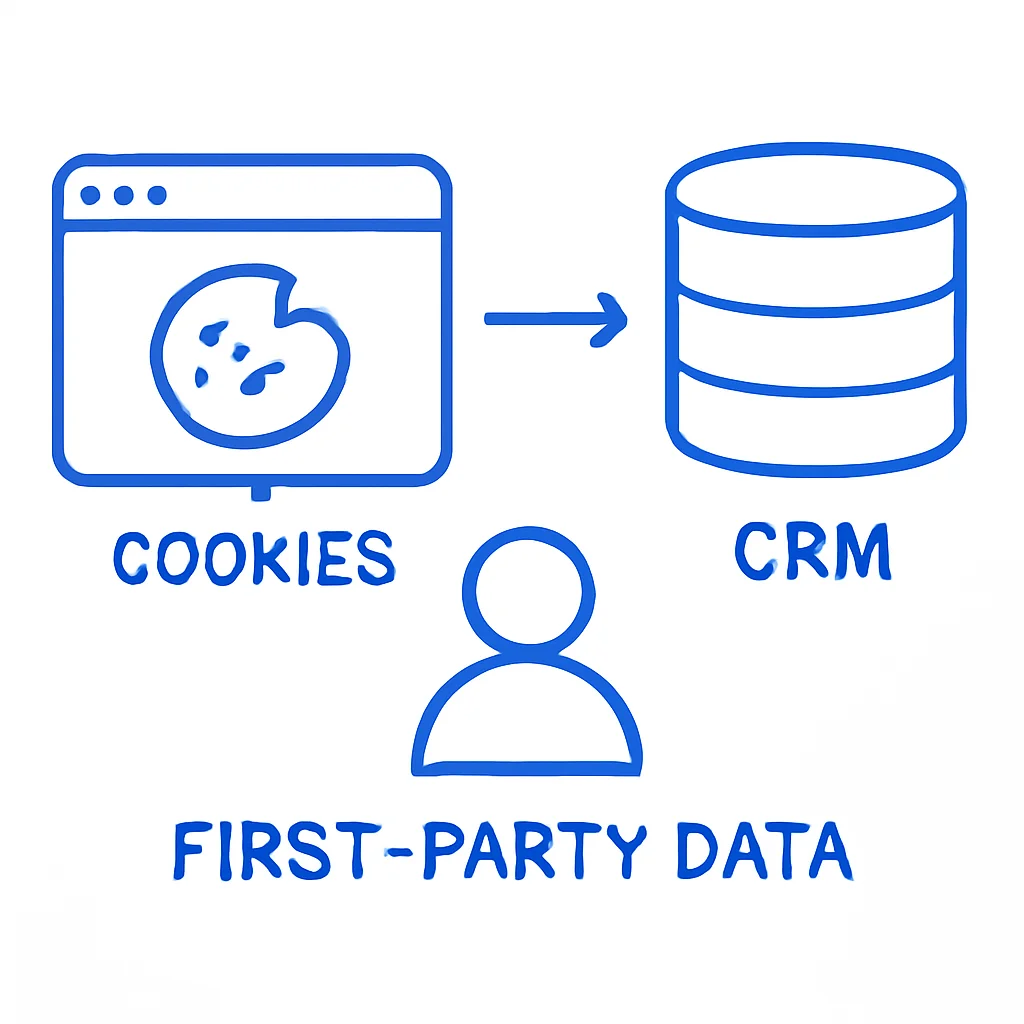
Third-party cookies are fading. Privacy regulations are tightening. And platforms are modeling more conversions. In 2026, first-party data is the only durable advantage. It’s the data you control, collected with consent, and usable across channels.
A first-party data strategy isn’t just a technical project. It’s a growth strategy. If you build it correctly, you’ll improve targeting, measurement, and personalization across the funnel.
Key Takeaways
- First-party data drives better targeting and more accurate measurement
- Server-side tracking and consent management are the foundation
- CDPs only add value if the data model is clean
- First-party data is a compounding asset, not a one-time fix
What Counts as First-Party Data
First-party data is information you collect directly from your audience. That includes:
- Website behavior and event data
- Email subscribers and customer lists
- Purchase history and LTV
- Product preferences and stated interests
Unlike third-party data, this is consented and reliable. It belongs to you.
How to Collect It (Without Killing Conversion Rates)
Collection is a balance between insight and friction. You need data, but you can’t slow the user down. The best approach is progressive collection:
- Start with minimal fields (email, region, intent)
- Add additional profile questions after value is delivered
- Use preference centers so users can update data over time
Surveys, quizzes, and account onboarding flows can gather rich data without hurting conversion. The key is to tie every question to a clear user benefit.
The Foundation: Consent and Compliance
If you don’t collect data ethically, you won’t be able to use it long term. You need a solid consent management setup that respects regional regulations.
Core requirements:
- Transparent consent banners
- Clear data usage policies
- Ability to honor deletion requests
- Storage policies for sensitive data
Compliance isn’t a box to check. It’s how you preserve the right to use your data.
Identity Resolution and User Stitching
The biggest technical gap in first-party data is identity. Users move across devices, sessions, and channels. You need a way to connect those interactions into one profile.
Practical steps:
- Use logged-in experiences where possible
- Capture email or phone early in the journey
- Store a consistent user ID across systems
- Avoid brittle cookie-only identifiers
This is the difference between scattered data and actionable data.
Server-Side Tracking: Non-Negotiable
Client-side tags are increasingly blocked. Server-side tracking is now table stakes.
Benefits:
- Higher event match rates
- Improved conversion modeling
- Better alignment across platforms
If you want reliable attribution, server-side is mandatory. It’s also the foundation for sending clean conversion signals to ad platforms.
Implementation Checklist for Server-Side Tracking
Server-side tracking doesn’t have to be complex, but it does need to be structured:
- Define the core events you want to send
- Set up a server-side container or endpoint
- Map client events to server events with deduplication keys
- Validate with test conversions and QA logs
The goal is consistency. One missing parameter can break attribution across platforms.
First-Party Data in Paid Media
Once you have clean data, paid media performance improves. Use first-party segments to build customer match audiences, suppress recent buyers, and create lookalike seeds. This improves targeting efficiency and reduces wasted spend. It also helps platforms optimize to higher-quality conversions when you pass back value-based events.
Building a Usable Data Model
Most companies collect data but can’t use it. The fix is a consistent data model.
Key steps:
- Define a standard event taxonomy
- Use consistent naming and parameters
- Map identities across devices and sessions
This makes your data portable across tools and reduces reporting errors.
Lifecycle Segmentation That Creates Revenue
Most teams segment by channel. Better teams segment by lifecycle stage. Use first-party data to build segments like:
- New subscriber, no purchase
- First-time buyer within 30 days
- Repeat buyers with high AOV
- Churn-risk customers with declining activity
These segments let you tailor messaging and offers, improving email-automation performance and customer retention.
CDPs: When They Add Value
Customer Data Platforms are not magic. They only help if you already have clean data. A CDP becomes valuable when you need to unify identities, build segments, and activate across channels.
Good CDP use cases:
- Real-time audience segmentation
- Suppressing recent buyers from acquisition ads
- Personalizing on-site content based on behaviors
Bad CDP use cases:
- Fixing broken data collection
- Replacing a clear analytics strategy
Data Governance and Quality
Your data strategy is only as good as your data quality. Build light governance so the system doesn’t drift:
- Define naming standards for events and properties
- Audit data monthly for missing or duplicated events
- Document changes so analysts can trust the data
Without governance, every report becomes a debate.
Activation: The Real Payoff
Data is useless unless you activate it. The highest-impact activations include:
- Customer match lists for paid platforms
- Lifecycle email journeys with email-automation
- Personalization by segment on landing pages
This is where Paid Media and Email programs become smarter and more efficient.
Metrics to Track First-Party Success
You need indicators that your strategy is working:
- Match rate improvements in ad platforms
- Higher attribution coverage in analytics
- Increased repeat purchase rate and LTV
- Reduced dependence on third-party audiences
Track these monthly to ensure the system is improving, not just running.
Build Trust Through Value Exchange
First-party data depends on trust. People won’t share information if they don’t see value. Be explicit about the benefit: personalization, faster support, or better offers. Avoid vague language. If you ask for data, explain why you need it and how it will improve the experience.
This also reduces compliance risk. Clear value exchange increases consent rates and lowers opt-outs over time.
Data Retention and Storage Policies
Holding data forever is risky and unnecessary. Set retention rules based on usefulness and compliance needs. For example, keep event data for 18-24 months, keep customer purchase history longer, and purge inactive subscriber data regularly. This keeps your system lean and reduces privacy exposure.
Integrations That Matter Most
You don’t need every tool integrated, but you do need the right ones:
- Analytics platform
- CRM
- Email service provider
- Paid media platforms
Start with those four. If they’re connected, you can already activate 80% of your strategy.
Personalization Without Creepiness
Use first-party data to personalize responsibly. Start with simple, helpful personalization: recommend content based on past views, highlight products related to prior purchases, and tailor email sequences by lifecycle stage. Avoid personalization that feels invasive, like referencing very specific browsing behavior in public-facing placements.
A good rule: if personalization would surprise the user, it’s too far. If it feels helpful, it’s likely safe.
First-Party Data and Deliverability
Email performance depends on clean lists. Using first-party data to segment your audience reduces spam complaints and improves sender reputation. Pair that with email warmup practices when launching new domains or sending to new segments. This protects long-term deliverability and keeps lifecycle programs effective.
First-Party Data for SEO and Content
First-party data isn’t just for ads. It can shape your organic strategy. Use on-site search logs, content engagement, and conversion paths to identify topics that actually drive revenue. This helps you prioritize content strategy and reduce keyword cannibalization.
If you know which pages convert, you can strengthen internal linking to those pages and improve the overall site architecture.
Reporting That Leadership Understands
Executives don’t want a data dump. They want a narrative. Use first-party data to show clear business outcomes: conversion rate by segment, revenue per cohort, and the lift from personalization. When reporting is tied to outcomes, it’s easier to secure resources for ongoing data work.
The 2026 First-Party Data Roadmap
- Audit existing data collection and consent setup.
- Implement server-side tracking and clean event taxonomy.
- Build high-value segments and activate them in paid and lifecycle.
- Layer in a CDP only if segmentation and activation require it.
Expect this roadmap to evolve. As platforms change and privacy rules tighten, revisit your data model and collection points at least twice per year.
Document changes and train teams on them so the system stays consistent.
First-party data is not a project you “finish.” It’s a system you maintain and improve. If you build it well, it becomes a competitive moat in a post-cookie world for years to come.
Key Terms in This Article
LTV
Lifetime Value – the total revenue a customer generates over their entire relationship.
CRM
Customer Relationship Management – software for managing customer interactions and data.
SEA
Search Engine Advertising – same as SEM, primarily used in Europe.
AOV
Average Order Value – the average amount spent per transaction.
ARR
Annual Recurring Revenue – the yearly value of subscription revenue.
CRO
Conversion Rate Optimization – systematically improving the percentage of visitors who convert.
Related Services
Related Articles
Marketing Metrics That Actually Drive Growth: The Complete 2026 Guide
Impressions and clicks don't pay the bills. Here are the 15 metrics that actually predict revenue growth—and how to track them without drowning in data.
The Multi-Channel Marketing Playbook for 2026
Running campaigns across Meta, LinkedIn, Google, TikTok, and more doesn't have to be chaos. Here's a complete framework for building a coordinated, data-driven multi-channel strategy that scales.
Why AI-Native Agencies Will Dominate Marketing in 2026
Traditional agencies are built for a world that no longer exists. AI-native agencies deliver faster execution, better results, and 40-60% lower costs. Here's exactly how—and what it means for your marketing.
Need help turning this into a system?
Wieldr works with selected teams on strategy, paid media, measurement, creative testing, and AI-native marketing workflows.
Work with Wieldr