AI Marketing Automation in 2026: From Creative to Reporting
How AI reshapes marketing operations in 2026: creative generation, bidding, segmentation, and reporting with clear guardrails.
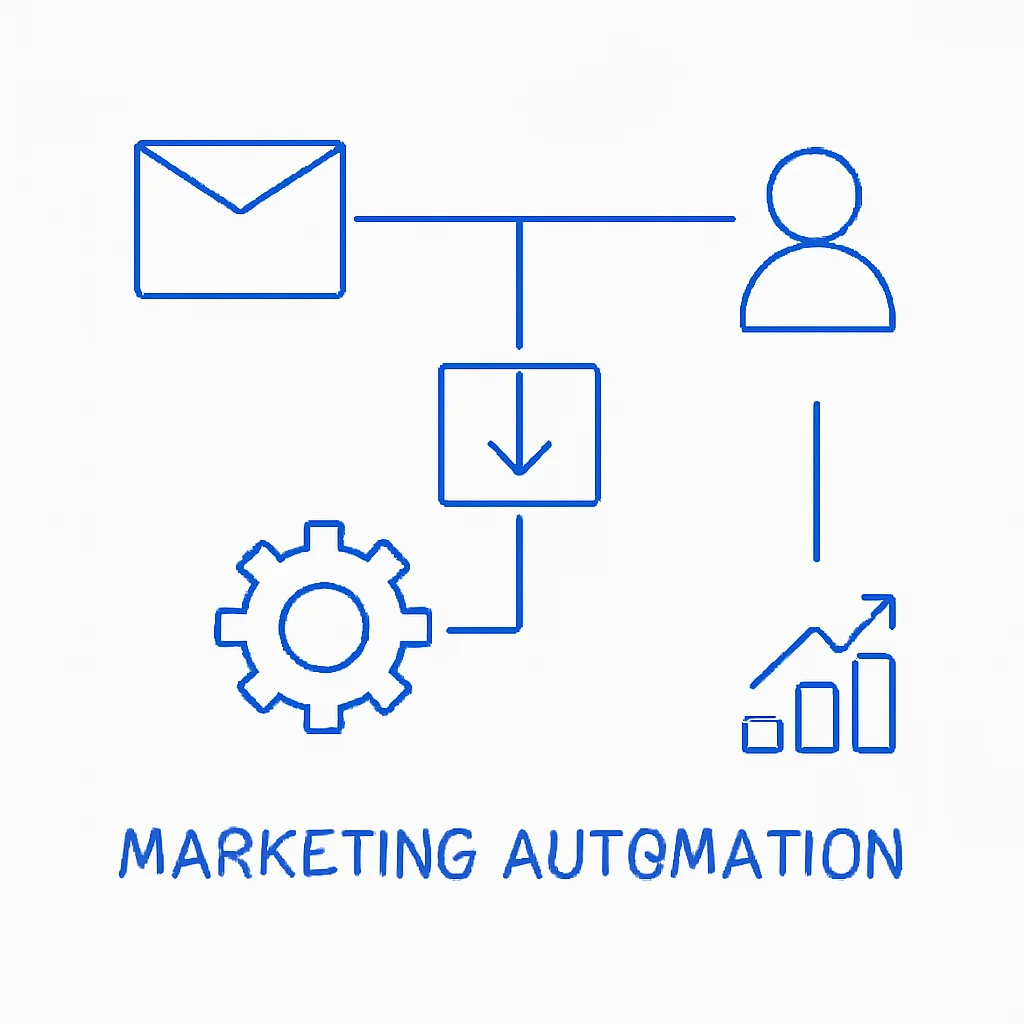
AI isn’t a feature anymore. In 2026 it’s the operating system of marketing. The winners aren’t using AI as a copy shortcut—they’re redesigning workflows so automation handles the heavy lifting and humans focus on strategy, creative direction, and quality control.
That shift changes everything: how you build campaigns, how you test creative, how you assign budgets, and how you report results. This guide breaks down where AI is actually creating leverage, where it can backfire, and how to design a marketing ops stack that scales without losing control.
Key Takeaways
- AI delivers the biggest gains in iteration speed, not “magic” performance
- Data quality determines AI output quality
- The right guardrails turn automation into repeatable wins
- Predictive analytics and anomaly detection should be standard in reporting
Where AI Actually Creates Leverage
AI’s best use cases in marketing operations are narrow and practical. The most valuable gains come from speed and scale, not creativity.
High-impact areas:
- Creative variation: Generating and testing multiple hooks, headlines, and angles
- Bidding and pacing: Automated bid strategies that learn faster than manual tuning
- Segmentation: Pattern-based clustering for email segmentation and audience targeting
- Reporting: Automated insights, anomaly detection, and early warning signals
The common thread is iteration. AI accelerates the feedback loop between idea and performance.
The Core AI Stack in 2026
A practical AI stack has four layers:
- Data layer: clean event data, server-side tagging, consistent taxonomy
- Model layer: large language models for text, embeddings for similarity search, and predictive models for outcomes
- Workflow layer: automation that routes tasks, approvals, and variations
- Decision layer: dashboards and attribution to connect impact to spend
If your data layer is weak, everything above it fails. AI doesn’t fix messy data—it amplifies it.
Creative Automation Without Losing Brand Voice
AI can generate creative, but it needs boundaries. Without guardrails, you get generic content and inconsistent brand voice.
What works:
- Clear creative briefs with constraints
- A library of best-performing hooks and angles
- Human review for brand tone and compliance
- Rapid testing cycles to validate output
Use AI for variation, not for core positioning. The positioning still comes from strategy.
Prompt Engineering Is a Real Skill
The difference between average AI output and usable output is usually a good prompt. Prompt engineering in 2026 isn’t about clever tricks—it’s about context. Provide the model with your audience, offer, tone, and objective. Then constrain the output with clear length and format rules.
Prompt principles that work:
- Specify the job (“write 5 hooks for founders who sell to mid-market HR”)
- Provide examples of winning copy
- Limit the output length to fit ad formats
- Include rejection criteria (“avoid hype, avoid jargon”)
If you can’t reproduce good results consistently, your prompt isn’t complete.
When Fine-Tuning Makes Sense
For most marketing teams, fine-tuning is optional. But if you produce high volumes of content and need strict brand consistency, fine-tuning can pay off.
Use fine-tuning when:
- You have thousands of high-quality examples
- You need a unique brand voice at scale
- You want consistent outputs across channels
Don’t fine-tune on mediocre content. You’ll just scale mediocrity.
Embeddings and Content Retrieval
Embeddings turn text into numerical vectors, making it easier to find similar content. In practice, embeddings power internal search, creative reuse, and content recommendation.
Examples:
- Find the top-performing ad concepts similar to a new product
- Surface FAQs to answer objections in new landing pages
- Map content to buying stages for better nurture flows
This is the backbone of effective RAG systems and a practical way to reuse what already works.
AI Beyond Text: Vision and Sentiment
Text is only part of the story. Modern creative performance is visual. Use computer-vision to tag and cluster images by attributes like color, layout, and product placement. Combine that with sentiment-analysis from comments and reviews to see what resonates.
This is how you connect creative aesthetics to performance, not just copy.
Bidding and Budget Automation
Most platforms now use AI-driven bidding by default. That’s good—manual bidding is increasingly outdated. But it only works if you feed it the right signals.
Key actions:
- Use offline conversions to optimize for qualified leads
- Pass back conversion values (not just counts)
- Define guardrails: max CPA, min ROAS, and payback-period thresholds
Automation without guardrails is how budgets disappear.
AI in Reporting: The Biggest Underused Win
AI reporting is where most teams are still behind. Automated insight systems can detect shifts before a human notices.
Use AI to:
- Detect anomalies in CPC or conversion-rate
- Predict spend vs goal slippage early
- Cluster performance by creative concept rather than ad ID
- Summarize weekly performance in business language
This is where Analytics & Reporting becomes a competitive edge.
RAG and Knowledge Workflows
Retrieval-augmented generation (RAG) is now mainstream in marketing. It lets you generate copy and insights based on your own data—campaign results, brand guidelines, and product info.
Practical RAG use cases:
- Drafting ads based on top-performing messages
- Generating sales enablement content from case studies
- Creating localized versions of core messaging
RAG only works if your knowledge base is clean. That’s why content hygiene and a consistent taxonomy matter.
Segmentation and Personalization at Scale
AI makes segmentation dramatically faster. Instead of manual rules, you can cluster audiences by behavioral patterns, intent signals, and lifecycle stage. Pair that with natural-language-processing to extract intent from support tickets, sales calls, and open-ended survey responses.
Practical applications:
- Build segments based on high-intent behaviors like pricing page visits and demo requests
- Use NLP to tag feedback themes and align messaging to real objections
- Personalize lifecycle journeys with dynamic content blocks
This improves email segmentation and reduces wasted spend on low-fit audiences.
AI for Forecasting and Scenario Planning
Most marketing teams still budget with spreadsheets. AI can model scenarios faster by using historical trends, seasonality, and pipeline velocity. This is where predictive analytics becomes a planning tool, not just a reporting feature.
Use forecasting to:
- Detect when pipeline will miss goal without a spend increase
- Plan creative and media ramps ahead of seasonal peaks
- Identify when marginal CAC starts to rise
The value isn’t perfect prediction. It’s earlier signals and faster response.
Governance: The Part Most Teams Skip
AI changes risk. You need governance that protects brand and compliance while still moving fast.
Core governance elements:
- Approved prompt templates for regulated categories
- Human review for anything customer-facing
- Version control for AI-generated assets and changes
- Clear rollback process when performance drops
AI is fast, but mistakes are faster. Governance makes AI safe enough to scale.
Org Design for AI-Driven Marketing
AI changes team structure. The highest-performing teams in 2026 use a hybrid model:
- Strategists define positioning and guardrails
- Operators run tests and automation workflows
- Analysts validate results and tune measurement
This division keeps creativity and accountability separate while still moving quickly.
The Risk: Automation Without Strategy
AI can execute. It can’t define positioning, pick markets, or decide where to compete. If you automate without a clear strategy, you’ll get faster mediocrity.
Strategy must define:
- Audience priority
- Value proposition and differentiation
- Channel mix and budget allocation
- Measurement framework
AI should execute within those boundaries.
How to Implement AI Ops Without Breaking Things
A safe rollout looks like this:
- Audit data: ensure events, UTM taxonomy, and goals are clean.
- Start with one workflow: creative testing or reporting automation.
- Add guardrails: thresholds, approvals, and escalation rules.
- Expand: add segmentation, bidding, and cross-channel orchestration.
By 2026, the teams that win are those with the fastest learning loops. AI is the engine. The strategy is still the driver.
If you’re unsure where to start, audit one workflow end-to-end. Measure how long it takes to ship a creative test, how quickly you can detect a performance drop, and how fast you can respond. Those cycle times are your real competitive moat. AI shortens them when implemented with clean data, clear prompts, and defined guardrails. Add a monthly review to keep the system honest and avoid silent drift, and document learnings for future optimization sprints.
If you want to build AI automation without sacrificing control, start with Paid Media and Analytics & Reporting, then layer in creative systems through Content.
Key Terms in This Article
CPC
Cost Per Click – the amount you pay each time someone clicks your ad.
CPA
Cost Per Acquisition – how much you pay to acquire one customer or conversion.
ROAS
Return On Ad Spend – revenue generated for every dollar spent on advertising.
CAC
Customer Acquisition Cost – the total cost to acquire one new customer.
API
Application Programming Interface – how different software systems connect and share data.
UTM
Urchin Tracking Module – parameters added to URLs to track campaign performance.
Related Services
Related Articles
Why AI-Native Agencies Will Dominate Marketing in 2026
Traditional agencies are built for a world that no longer exists. AI-native agencies deliver faster execution, better results, and 40-60% lower costs. Here's exactly how—and what it means for your marketing.
Marketing Metrics That Actually Drive Growth: The Complete 2026 Guide
Impressions and clicks don't pay the bills. Here are the 15 metrics that actually predict revenue growth—and how to track them without drowning in data.
The Performance Creative Playbook: How to Build Ads That Actually Convert in 2026
Most ads fail because of creative, not targeting. Here's the complete framework for building high-performing ad creative—from concept to execution to systematic testing—that drives conversions, not just clicks.
Need help turning this into a system?
Wieldr works with selected teams on strategy, paid media, measurement, creative testing, and AI-native marketing workflows.
Work with Wieldr