The Performance Creative Playbook: How to Build Ads That Actually Convert in 2026
Most ads fail because of creative, not targeting. Here's the complete framework for building high-performing ad creative—from concept to execution to systematic testing—that drives conversions, not just clicks.
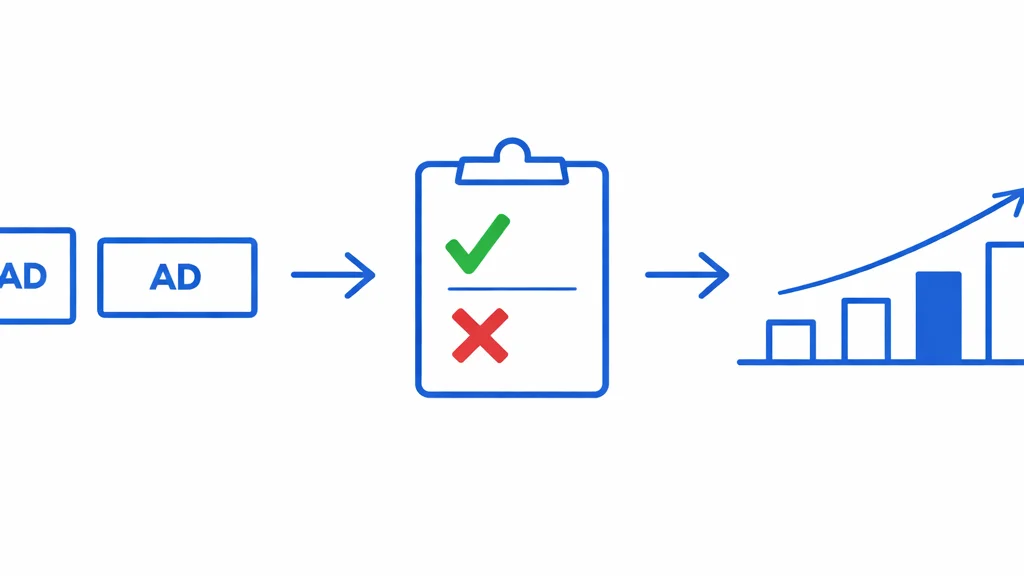
Most marketing campaigns fail at the creative level, not the targeting level.
You can have perfect audience segmentation, flawless attribution, and optimal bid strategies—but if your ad creative doesn’t stop the scroll, communicate value, and drive action, none of it matters.
The uncomfortable truth: 80% of campaign performance is determined by creative quality. Targeting might give you a 10-20% lift. Creative can give you 3-5x improvements in conversion rate.
Yet most companies treat creative as an afterthought. They run the same 3 static images for months. They test headlines but not formats. They optimize targeting while ignoring the fact that their ads are boring, generic, and indistinguishable from competitors.
In 2026, the winners are companies that treat creative as a systematic, data-driven discipline—not a one-time art project.
Key Takeaways
- Creative quality drives 70-80% of ad performance (targeting drives 20-30%)
- The best-performing ads follow a proven structure: pattern interrupt → value prop → proof → call-to-action
- Platform-native creative (looks like organic content) outperforms “polished ad” creative by 2-3x
- Volume matters: test 20-50 creative variants per campaign, not 2-3
- Creative fatigue hits after 7-14 days on Meta—refresh constantly or watch performance collapse
- AI tools enable 10x creative output, but strategy and direction still require human judgment
- Test format (video vs image vs carousel), not just copy variations
The Creative Performance Hierarchy
Not all creative decisions have equal impact. Focus your effort where it matters most.
Impact Ranking (High to Low)
- Format (video vs image vs carousel vs UGC) — ~50% of variance
- Hook / Pattern Interrupt (first 3 seconds) — ~25% of variance
- Value Proposition (what’s in it for the viewer?) — ~15% of variance
- Social Proof (testimonials, results, trust signals) — ~5% of variance
- Call-to-Action (what you want them to do) — ~3% of variance
- Design Polish (colors, fonts, production quality) — ~2% of variance
What this means: Spending weeks perfecting logo placement and color gradients (2% impact) while using the same static image format (50% impact) is backwards.
Start with format. Then nail the hook. Everything else is optimization.
The Anatomy of High-Performing Ads
Great performance creative follows a proven structure. Here’s the framework we use at wieldr:
The 4-Part Performance Creative Structure
1. Pattern Interrupt (0-3 seconds)
Your ad competes with friends, family, memes, and 1,000 other distractions. You have 3 seconds to stop the scroll. If you don’t, nothing else matters.
What works:
- Visual contrast: Bright colors, unexpected imagery, motion
- Text hooks: “Stop paying for [problem]” / “This is why your [thing] isn’t working”
- Faces and emotion: Human faces (especially expressive ones) outperform product shots
- Movement: Video outperforms static; dynamic motion in first 3 seconds is critical
What doesn’t work:
- Generic stock photos
- Logo-first branding (nobody cares about your logo in the feed)
- Slow builds (“Let me tell you a story…” loses 80% of viewers before the point)
2. Value Proposition (3-10 seconds)
Once you’ve stopped the scroll, you have ~7 seconds to communicate what’s in it for them. Not what your product does. What problem it solves or benefit it delivers.
Strong value props:
- “Get [desired outcome] without [pain point]”
- “[Benefit] in [timeframe]”
- “The [category] that actually [unique mechanism]”
Weak value props:
- “We’re the leading provider of…” (nobody cares)
- “Innovative solutions for…” (meaningless jargon)
- Feature lists without benefits
Example comparison:
❌ Weak: “Our AI-powered analytics platform provides real-time insights across 15+ channels with customizable dashboards and automated reporting.”
✅ Strong: “See which marketing channels actually drive revenue—in real time. No more waiting 30 days for reports that don’t tell you what to do next.”
3. Proof (10-20 seconds)
Claims without proof are ignored. Proof without claims is confusing. You need both.
Proof types (ranked by persuasiveness):
- Specific customer results: “Sarah reduced CAC by 47% in 6 weeks”
- User-generated content: Real customers talking about real results
- Data/numbers: “2,847 companies use this to…”
- Testimonials: Quotes from real users (with photo and name)
- Awards/certifications: Less impactful but better than nothing
4. Call-to-Action (final 3-5 seconds)
Tell them exactly what to do next. Be direct. Be specific.
Strong CTAs:
- “Try free for 14 days—no card required”
- “Book a demo and get [bonus]”
- “Download the guide”
- “Get [specific outcome] in [timeframe]”
Weak CTAs:
- “Learn more” (vague, low commitment signal)
- “Click here” (what happens when I click?)
- “Visit our website” (why?)
Format-Specific Creative Best Practices
Different formats serve different goals. Here’s when to use each and how to execute.
Video Ads (Best for Awareness + Engagement)
Why video wins: Video creative on Meta gets 2-3x higher engagement than static images. On TikTok and YouTube, video is the only option.
What works:
- Length: 15-30 seconds for most platforms (6-15 seconds for TikTok)
- Captions: 85% of video is watched without sound—burn-in subtitles
- Hook in first 3 seconds: Show the payoff, not a slow intro
- Native format: Vertical (9:16) for Stories/Reels/TikTok, square (1:1) for feed
- Low production polish: UGC-style “authentic” video outperforms high-production “ad-like” video
What to test:
- Spokesperson vs product demo vs screen recording vs animation
- Script variations (problem-first vs solution-first vs benefit-first)
- Different hooks (first 3 seconds)
- Ending CTA variations
Static Image Ads (Best for Direct Response)
Why static still works: Lower production cost, faster to produce at scale, often outperforms video for bottom-of-funnel conversion.
What works:
- High contrast: Bold colors, clear focal point
- Minimal text: 20% rule is gone, but less text = more attention to the image
- Faces: Human faces increase engagement 30-40%
- Before/After: Visual proof of transformation
- Product-in-use: Show the product solving the problem, not sitting on a white background
What to test:
- Lifestyle vs product shot vs infographic vs meme format
- With/without text overlay
- Different backgrounds (solid color vs environment vs blurred)
- Composition (centered vs rule of thirds)
Carousel Ads (Best for Storytelling + Product Showcases)
Why carousels work: Higher engagement (people swipe), more space to tell a story, opportunity to show multiple products or benefits.
What works:
- Card 1 = Hook: Grab attention, set up the payoff
- Cards 2-4 = Value/Proof: Benefits, features, social proof
- Final card = CTA: Drive the action
- Visual continuity: Design cards as a cohesive set, not random images
- Swipe cues: Arrows or visual indicators that there’s more content
What to test:
- Number of cards (3 vs 5 vs 7)
- Story sequence (problem → solution vs benefit showcase vs customer journey)
- First card design (the hook is everything)
User-Generated Content (UGC) (Best for Trust + Authenticity)
Why UGC crushes polished ads: It doesn’t look like an ad. It looks like a real person sharing something they love. Trust signals are off the charts.
What works:
- Real customers: Actual users, not actors
- Low production quality: Selfie-style, authentic, unscripted feel
- Specific stories: “I used to struggle with [problem], then I found [product], now [specific result]”
- Testimonial-style: Direct-to-camera, conversational tone
What to test:
- Different customers (demographics, use cases)
- Script variations (problem-focused vs benefit-focused vs story-driven)
- Length (15s vs 30s vs 60s)
The Creative Testing Framework
Great creative isn’t about one brilliant idea. It’s about systematic testing at scale.
Volume: The Most Underrated Creative Strategy
Most companies test 2-3 creative variants per campaign. The best companies test 20-50.
Why volume matters:
- Creative is unpredictable: You cannot reliably predict what will work. The ad you think is brilliant often flops. The weird test you almost didn’t run becomes your best performer.
- Winner distribution is skewed: 80% of your conversions will come from 20% of your creatives. You need volume to find the outliers.
- Diminishing returns are real: The jump from 1 creative to 5 is massive. From 5 to 20 is significant. From 20 to 50 is marginal. But 50 gives you far more winning permutations than 5.
The math: If your best creative converts at 5% and your average converts at 2%, every additional test is a lottery ticket with a 1-in-5 chance of 2.5x ROI improvement.
What to Test (Priority Order)
- Format (video vs static vs carousel vs UGC)
- Hook (first 3 seconds of video, or primary headline)
- Value proposition (what benefit you’re leading with)
- Social proof (testimonial, data point, case study)
- Visual style (colors, composition, lifestyle vs product)
- CTA (wording, placement, urgency)
Testing structure:
- Concept-level tests: Big swings. Completely different angles, formats, or messages.
- Variation tests: Smaller changes within a winning concept (different headlines, images, etc.)
Run concept-level tests first to find winners. Then run variation tests to optimize.
How to Structure a Creative Test
1. Hypothesis-driven testing
Don’t just throw random ideas at the wall. Test with intent.
Example hypotheses:
- “UGC-style video will outperform polished product demo because it feels more authentic”
- “Problem-first messaging will outperform benefit-first messaging because our audience doesn’t yet know they have this problem”
- “Carousel format will outperform single image because we need more space to explain the product”
2. Controlled variables
Change one thing at a time (when possible). If you test a new video with a new headline and a new audience, you won’t know what drove the result.
3. Statistical significance
Don’t declare a winner after 50 impressions. Wait for meaningful sample sizes:
- Awareness campaigns: 10,000+ impressions per variant
- Conversion campaigns: 50-100+ conversions per variant (or at least 5,000 clicks)
Use tools like Meta’s A/B testing framework or Google’s Experiments feature to ensure valid comparisons.
4. Time-based controls
Run tests simultaneously (not sequentially) to avoid time-of-week or seasonality biases. Monday traffic behaves differently than Friday traffic.
Creative Refresh Cadence
Creative fatigue is real. The same ad shown to the same audience loses effectiveness over time.
Typical fatigue timeline (Meta/Instagram):
- Days 1-7: Peak performance
- Days 8-14: Performance starts declining (frequency increases, engagement drops)
- Days 15-21: Significant decline (audience is saturated)
- Days 22+: Dead creative (burning budget, not converting)
Solution: Planned refresh cycles
- High-spend campaigns ($10K+/month): Refresh creative weekly
- Medium-spend campaigns ($3-10K/month): Refresh every 2 weeks
- Low-spend campaigns (<$3K/month): Refresh monthly
What “refresh” means:
- New creative concepts (not just tweaked headlines)
- New formats or angles
- Updated social proof or offers
This is where AI-native creative workflows create massive leverage—producing 20-50 variants per week instead of 2-3.
Platform-Specific Creative Strategies
Different platforms reward different creative styles. Optimize for the platform, not a one-size-fits-all approach.
Meta (Facebook & Instagram)
What works:
- Vertical video (9:16) for Stories and Reels
- Square video (1:1) for feed placements
- UGC-style content that blends with organic posts
- Bold hooks in the first 3 seconds (autoplay with no sound)
- Captions/subtitles always (85% watch muted)
What doesn’t work:
- Horizontal video (wasted screen space on mobile)
- Heavy branding (feels like an ad, gets scrolled past)
- Long text overlays (cut off on mobile)
Testing priority: Hook variations, UGC vs polished, format (video vs static vs carousel)
What works:
- Professional context: Office settings, business use cases, ROI-focused messaging
- Thought leadership: Founder/executive as spokesperson
- Data-driven: Charts, stats, case studies perform well
- Single image + strong copy: LinkedIn audiences read more than other platforms
- Native video: Uploaded directly to LinkedIn (not YouTube links)
What doesn’t work:
- Overly casual or meme-style creative (wrong context)
- Consumer-focused emotional appeals (B2B audience wants ROI)
- Heavy CTA pressure without education first
Testing priority: Spokesperson vs data visualization, copy length, professional polish vs authentic
TikTok
What works:
- Native, organic style: Looks like user-generated content, not an ad
- Hooks in first 1 second: Even faster than other platforms
- Trends and audio: Leverage trending sounds and formats
- Fast cuts: High energy, rapid pacing
- Vertical-only (9:16)
What doesn’t work:
- Polished, “ad-like” creative (immediate scroll)
- Slow pacing or talking-head intros
- Horizontal or square video
Testing priority: Trending audio, different hooks, pacing variations
Google Search & Display
What works (Search text ads):
- Keyword match in headlines (shows relevance)
- Specific value props: “Free Shipping” / “24/7 Support” / “No Credit Card Required”
- Ad extensions: Sitelinks, callouts, structured snippets (increase CTR 10-15%)
What works (Display):
- High contrast, bold colors
- Minimal text (image + logo + short headline)
- Retargeting-specific creative: “Come back and save 10%” / “Still thinking about [product]?”
Testing priority: Headline variations, value prop testing, extension combinations
YouTube
What works:
- Skippable in-stream: Hook in first 5 seconds (before skip button), benefit-driven
- Non-skippable (15s): Every second counts, front-load value
- Longer-form (30-60s): Educational, storytelling, product demos for engaged viewers
What doesn’t work:
- Generic brand intros (skipped immediately)
- Slow storytelling without payoff preview
- Horizontal-only creative (misses mobile placements)
AI-Powered Creative Production
AI is changing creative production in three major ways:
1. Volume at Speed
Tools like Midjourney, DALL·E, and Stable Diffusion enable generating 50+ image variants in the time it used to take to brief a designer for 5.
Use cases:
- Concept exploration (test 10 different visual styles before committing)
- Background variations (same subject, different environments)
- Rapid A/B testing (20 variations of product placement, colors, composition)
Human role: Art direction, concept selection, quality control. AI generates options; humans choose and refine.
2. Video Production at Scale
AI video tools (Runway, Synthesia, HeyGen, Pictory) enable:
- Script-to-video: Turn written scripts into video ads with AI avatars or stock footage
- Voiceover synthesis: Natural-sounding voiceovers in 50+ languages via LLM-powered tools
- Auto-captioning and editing: Instantly add subtitles, cut dead space, adjust pacing
Limitation: AI-generated video still looks slightly “off” for high-trust scenarios. Best used for high-volume testing, not flagship brand campaigns.
3. Copy Variations at Scale
LLMs like GPT-4 and Claude can generate:
- 50 headline variations in seconds
- Ad copy adapted for different personas or use cases
- Multi-language localization with cultural context
Human role: Strategic direction, brand voice enforcement, final approval. AI generates volume; humans ensure quality and consistency.
The wieldr approach: We use AI and creative automation to generate 50-100 creative concepts per campaign, then apply human editorial judgment to select the top 15-20 for launch. The result: 10x creative output with the same strategic oversight.
Creative Performance Metrics That Actually Matter
Stop optimizing for vanity metrics. Focus on these:
Primary Metrics
- Conversion Rate (CR): The ultimate measure. What % of people who see the ad take the desired action?
- Cost Per Acquisition (CPA): How much does it cost to acquire one customer with this creative?
- Return on Ad Spend (ROAS): Revenue generated / ad spend. The efficiency metric.
Diagnostic Metrics
- Click-Through Rate (CTR): Are people interested enough to click? (But high CTR + low CR = bad landing page or misleading ad.)
- Video Completion Rate: What % watch to the end? (Signals engagement quality.)
- Hook Rate (first 3 seconds): What % of viewers watch past 3 seconds? (Measures pattern interrupt effectiveness.)
- Engagement Rate: Likes, comments, shares. (Signals relevance and emotional resonance.)
Creative Health Metrics
- Frequency: How many times has the average person seen this ad? (>3-4 on Meta = fatigue risk.)
- Relevance Score (Meta): Platform’s assessment of ad quality. Low scores = higher costs.
- Creative Lifespan: How long does performance hold before declining? (Longer lifespan = better creative durability.)
The rule: Optimize for conversion metrics (CR, CPA, ROAS). Use diagnostic metrics to understand why something is or isn’t working. Monitor health metrics to catch fatigue before it kills performance.
Common Creative Mistakes (and How to Fix Them)
Mistake #1: “Set It and Forget It”
Launching 3 ads and running them for 6 months.
Why it fails: Creative fatigue kills performance after 7-14 days on most platforms.
Fix: Build a creative refresh calendar. Weekly or bi-weekly new creative launches. Continuous testing pipeline.
Mistake #2: Testing Too Many Variables at Once
New video + new headline + new audience + new landing page = you have no idea what drove the result.
Fix: Isolate variables. Test creative with the same audience and landing page. Then test audience. Then landing page. Build incrementally.
Mistake #3: Declaring Winners Too Early
“This ad got 5 conversions in the first day—it’s a winner!”
Why it fails: Small sample sizes have massive variance. Day 1 performance rarely predicts week 1 performance.
Fix: Wait for statistical significance. At minimum, 50-100 conversions or 7 days of data. Use tools like Meta’s A/B test feature that won’t declare a winner until confidence is high.
Mistake #4: Ignoring Platform Context
Running the same polished, brand-heavy creative on TikTok that works on LinkedIn.
Why it fails: Audiences have platform-specific expectations. TikTok users expect authentic, fast-paced, native-style content. LinkedIn users expect professional, data-driven messaging.
Fix: Adapt creative to platform norms. Same message, different execution. Vertical UGC video for TikTok, thought leadership + data viz for LinkedIn.
Mistake #5: Optimizing for Clicks, Not Conversions
High CTR, low conversion rate = you’re driving the wrong traffic or misleading people.
Why it fails: Clicks are easy to game with clickbait. Conversions require real value delivery.
Fix: Optimize campaigns for conversions, not clicks. Use conversion-based bidding. Measure success by CPA and ROAS, not CTR.
The Creative Production Workflow
Here’s the systematic process we use at wieldr to produce high-performing creative at scale:
Week 1: Strategy & Concepting
- Define the goal: Awareness? Lead gen? Sales?
- Audience research: What are their pain points, objections, desires?
- Competitive analysis: What are competitors running? Where are the gaps?
- Creative brief: Messaging pillars, value props, proof points, CTAs
- Concept generation: 10-20 different creative concepts (format + angle + hook combinations)
Week 2: Production & Testing
- Produce creative assets: 20-50 variants across formats (video, static, carousel, UGC)
- Launch A/B tests: Run all variants simultaneously with equal budget allocation
- Monitor early signals: CTR, engagement rate, early conversion data
Week 3-4: Optimization & Scale
- Identify winners: Top 20% of creative by CPA or ROAS
- Kill losers: Bottom 50% turned off
- Scale winners: Increase budget on top performers
- Iterate on winners: Create variations of winning concepts (new hooks, slight angle shifts)
Ongoing: Refresh & Repeat
- Monitor fatigue: Watch frequency and performance degradation
- Refresh creative: New concepts introduced every 7-14 days
- Build creative library: Archive winners, learnings, and frameworks for future campaigns
FAQ
How many creative variants should I test per campaign?
Start with 10-15 if you’re new to testing. Aim for 20-50 as you scale. The key is having enough volume to find statistical winners without spreading budget too thin. For campaigns under $3K/month, 10-15 is realistic. For $10K+/month campaigns, 30-50 variants give you the best odds of finding outliers.
How long should I run a creative test before deciding?
Minimum 7 days or 50-100 conversions per variant, whichever comes first. For awareness campaigns, 10,000+ impressions per variant. Declaring winners too early leads to false positives. Use confidence intervals and statistical significance tools built into Meta Ads Manager or Google Ads.
Should I use AI tools for creative production?
Yes, but with human oversight. AI is exceptional for generating volume (image variations, copy options, video scripts). Humans are still better at strategic direction, brand consistency, and final quality control. The best approach: AI generates 50 options, humans select and refine the top 15-20.
What’s the biggest factor in creative performance?
Format (video vs static vs carousel) drives ~50% of variance. Hook (first 3 seconds) drives ~25%. Everything else—design polish, CTA wording, color choices—is optimization. Focus your effort on format and hook first.
How often should I refresh creative?
High-spend campaigns ($10K+/month): weekly. Medium-spend ($3-10K/month): every 2 weeks. Low-spend (<$3K/month): monthly. The key driver is creative fatigue—once frequency hits 3-4 on Meta, performance starts declining. Refresh before fatigue kills ROI.
Do I need expensive video production?
No. UGC-style “authentic” video shot on smartphones often outperforms high-production video by 2-3x because it doesn’t look like an ad. Invest in volume and testing velocity, not production polish. Exception: brand campaigns for large enterprises, where polish signals credibility.
Need help building a creative testing engine that scales? Get in touch. We produce 50-100 creative variants per campaign using AI-powered workflows—then optimize based on real conversion data, not guesswork.
Related reading: The Multi-Channel Marketing Playbook for 2026 · Marketing Metrics That Actually Drive Growth · Why AI-Native Agencies Will Dominate Marketing in 2026
Topics
Key Terms in This Article
CPA
Cost Per Acquisition – how much you pay to acquire one customer or conversion.
CTR
Click-Through Rate – the percentage of people who click your ad after seeing it.
ROAS
Return On Ad Spend – revenue generated for every dollar spent on advertising.
ROI
Return On Investment – the profitability of your marketing investment.
CAC
Customer Acquisition Cost – the total cost to acquire one new customer.
API
Application Programming Interface – how different software systems connect and share data.
Related Services
Related Articles
The Multi-Channel Marketing Playbook for 2026
Running campaigns across Meta, LinkedIn, Google, TikTok, and more doesn't have to be chaos. Here's a complete framework for building a coordinated, data-driven multi-channel strategy that scales.
Marketing Metrics That Actually Drive Growth: The Complete 2026 Guide
Impressions and clicks don't pay the bills. Here are the 15 metrics that actually predict revenue growth—and how to track them without drowning in data.
Why AI-Native Agencies Will Dominate Marketing in 2026
Traditional agencies are built for a world that no longer exists. AI-native agencies deliver faster execution, better results, and 40-60% lower costs. Here's exactly how—and what it means for your marketing.
Need help turning this into a system?
Wieldr works with selected teams on strategy, paid media, measurement, creative testing, and AI-native marketing workflows.
Work with Wieldr