Google Ads Performance Max in 2026: The Practical Guide
A 2026 playbook for Performance Max: what changed, how to structure assets, and how to measure results without losing control.
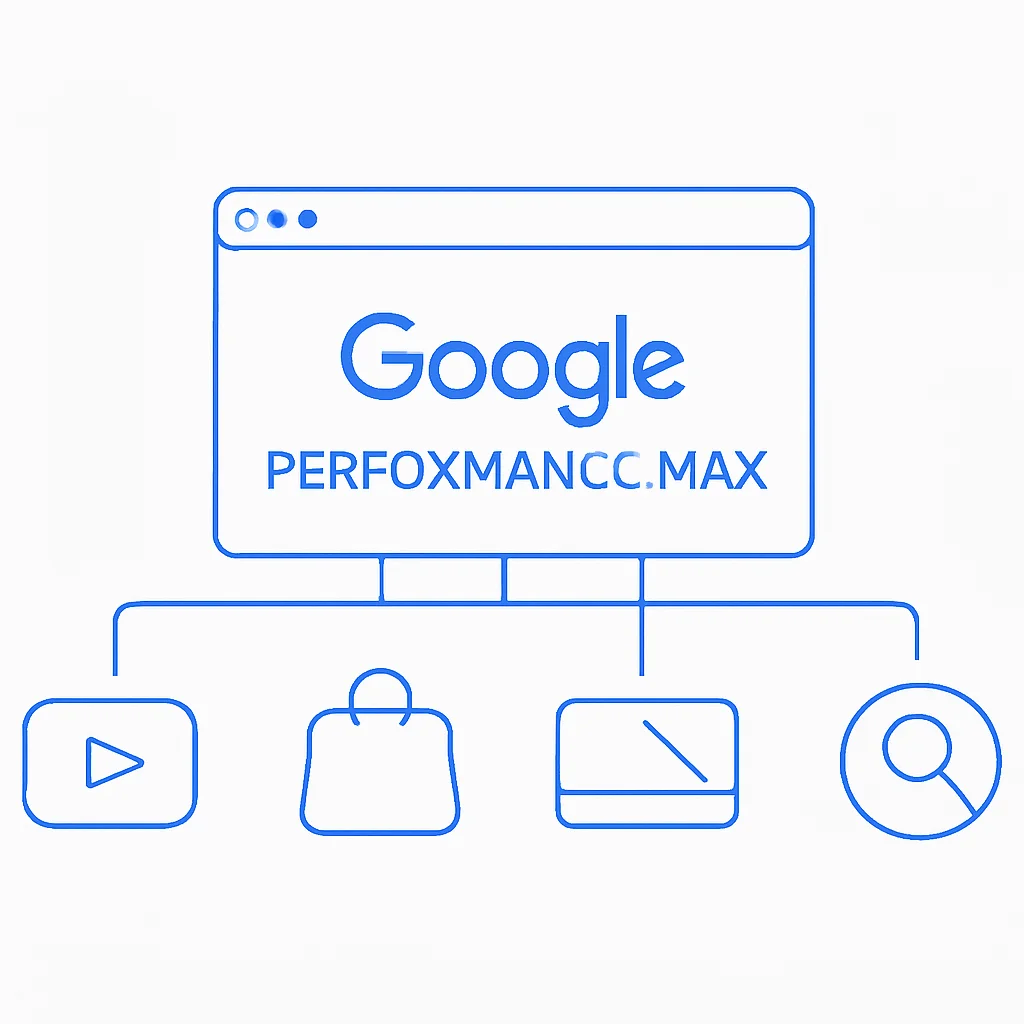
Performance Max isn’t new anymore. In 2026, it’s the default Google Ads campaign type for commerce, local, and lead gen. If you’re still treating PMax as an experimental sidecar, you’re missing how Google expects you to buy media now: with broad automation, better inputs, and tighter measurement guardrails.
The challenge is control. PMax blends Search, Shopping, Display, YouTube, Discover, and Gmail into one campaign, making it harder to diagnose what’s working. That’s why the best PMax accounts in 2026 are engineered for inputs rather than micro-optimizations: feed quality, creative coverage, audience signals, and clean conversion data. Get those right, and PMax outperforms. Get them wrong, and it becomes a budget black box.
This guide walks through what changed, how to set up PMax in 2026, and the practical steps to keep efficiency high without chasing the algorithm.
Key Takeaways
- PMax wins when you feed it clean conversion data and strong creative coverage
- Asset groups should mirror product/category structure, not ad formats
- Audience signals accelerate learning but don’t “lock” targeting
- Retailers must treat the product feed as a primary creative surface
- Incrementality testing and attribution modeling matter more than channel-level CPA
What’s Changed in 2026
Google has made three important shifts that affect how you run PMax today.
First, reporting has become more granular, but still not comparable to legacy campaigns. You can now access placement-level insights and search term themes, yet true query-level transparency is still limited. That means you need to use guardrails like conversion-rate floors, category-level ROAS targets, and holdout tests to evaluate performance.
Second, Google has tightened the integration between PMax and demand gen. PMax increasingly behaves like a “best available inventory” campaign. It will pull budget into YouTube and Discover if your creative performs well there. If you don’t provide video assets, Google auto-generates them. Those auto assets can work, but they rarely beat tailored creative.
Third, first-party data is a bigger lever than it was in 2024. With first-party-data and customer match lists, you can accelerate learning and unlock higher-value segments in the early phase, even though the algorithm will expand beyond signals over time.
PMax Is Inputs-First
Think of PMax as a system that optimizes across a blended inventory pool. You control inputs, not placements. The best way to improve outcomes is to improve the inputs the model sees.
The four inputs that matter most:
- Conversion data: Clean, deduped events, ideally with enhanced conversions and server-side tagging.
- Product feed quality: Titles, images, pricing, and availability drive where and how products show.
- Creative coverage: Multiple variants across formats, hooks, and value props.
- Audience signals: Directional signals that accelerate learning.
If you optimize these inputs, PMax can outperform Shopping Standard and even Search campaigns for mid- and lower-funnel objectives.
Asset Group Architecture That Works
Most underperforming PMax accounts are over-compressed. A single asset group for 300 products forces the system to average intent. You need asset groups that map to business structure.
Use these rules of thumb:
- One asset group per primary category or margin band
- Separate asset groups for distinct audience intent (e.g., “replacement parts” vs “new buyers”)
- Keep shared budgets at the campaign level and manage bids through asset group ROAS targets
Think of asset groups as creative + feed bundles. Each should have its own headline set, images, video, and listing group. Don’t mix premium and discount SKUs in the same group; the algorithm will chase cheaper conversions and starve margin.
For a deeper tactical breakdown, see our Performance Max asset groups guide, which covers margin-based asset groups, feed labels, creative inputs, and signal guardrails.
The Feed Is Your Best Ad
For retail and DTC, PMax performance often rises or falls with feed quality. Your product title is your most important copy line. Your images are your primary creative.
Feed improvements that consistently lift performance:
- Include key differentiators and size/variant attributes in titles
- Use high-resolution, clean-background images with visual contrast
- Add “lifestyle” images in additional image slots
- Ensure pricing and availability are accurate to avoid disapprovals
- Use custom labels for margin, seasonality, and inventory velocity
Feed quality also impacts search intent matching. If your title doesn’t contain the phrase someone searches, PMax can’t match the query, even with broad automation.
Creative Coverage: Treat PMax Like a Multi-Format Engine
PMax doesn’t just need a few images. It needs coverage. That means multiple creative angles, different durations, and various ad sizes. If you don’t give Google assets, it generates them. That’s a last resort.
Minimum creative coverage per asset group:
- 5-8 headlines, including value prop and proof points
- 5 descriptions that map to key objections
- 10-15 images, split between product and lifestyle
- 2-3 short videos (6-15s), 1-2 longer (20-30s)
- Logo variations for dark and light placements
This is where creative testing becomes a core loop, not a nice-to-have. The faster you rotate new creatives, the more you avoid ad fatigue and keep performance stable.
Audience Signals That Actually Help
Audience signals are not targeting. They are training hints. In 2026, the best signals come from three places:
- Customer lists: High-LTV segments, repeat buyers, and VIPs.
- Site behavior: Visitors to top-margin categories or high-intent pages.
- Search intent: Custom segments built from queries that indicate strong purchase intent.
Don’t over-segment signals. Two to three strong signals per asset group is enough. Too many fragmented signals slow learning and can dilute performance.
Measurement Without Illusions
PMax can look great on platform but fail to move the business. You need a measurement plan that accounts for blended attribution and cannibalization.
Use these layers:
- Platform metrics: Track CPA, ROAS, and CTR to manage efficiency.
- Business metrics: Watch AOV, LTV, and repeat purchase rate.
- Incrementality testing: Run geo or audience holdouts to measure lift.
- Attribution modeling: Use position-based or data-driven models to avoid over-crediting last click.
This is where Analytics & Reporting earns its keep. If you can’t measure lift, you can’t confidently scale.
Budgeting and Learning Phase Reality
PMax needs volume to stabilize. If your budget is too low, it will thrash and never exit learning. For most accounts:
- $50/day is a bare minimum for low-volume niches
- $150-300/day per campaign is more realistic for steady learning
- Run for at least 2-3 weeks before making major changes
If you’re below that, consolidate asset groups and simplify signals. Don’t try to run ten micro-campaigns on a small budget.
When PMax Isn’t the Right Answer
PMax is not perfect for every case. It struggles when:
- Your conversion volume is too low for learning
- You sell highly regulated or restricted products
- You need strict brand control over placements
- Your product feed is messy or incomplete
In these cases, pairing PMax with Search campaigns or using standard Shopping can preserve control while still leveraging automation.
The 2026 PMax Optimization Loop
Here’s a practical loop that works across e-commerce and lead gen:
- Weekly: Review asset group performance, replace bottom 20% creatives, update feed issues.
- Bi-weekly: Refresh audience signals and exclude low-quality lead sources.
- Monthly: Run a creative sprint, add new angles, and update video assets.
- Quarterly: Run incrementality tests and update attribution settings.
This cadence keeps PMax in a state of healthy learning without constant resets.
Lead Gen PMax: What’s Different
If you’re a B2B or lead gen advertiser, PMax can work, but you must manage lead quality.
Best practices for lead gen:
- Use offline conversion imports to optimize for qualified leads or opportunities
- Score leads and pass back value to Google to optimize toward quality
- Limit form fields to reduce friction, but include a qualifying question
- Align landing pages with site-speed and mobile best practices to reduce drop-off
PMax will optimize for volume if you let it. You have to teach it what quality means.
PMax and the Post-Cookie World
Google’s privacy shifts mean more modeled conversions. That makes server-side tagging and first-party data non-negotiable. Use consent-aware tagging and keep an eye on cookie depreciation timelines.
If you get this right, PMax becomes a compounding advantage. If you don’t, you’ll be stuck with fuzzy data and less effective automation.
FAQ
Should PMax replace standard Search campaigns?
Not completely. Keep dedicated Search campaigns for branded terms, highest-intent keywords, and testing where you need clearer query-level control. PMax is strongest as a scale layer, not as the only campaign type in the account.
How many asset groups should a PMax campaign have?
Use as many as you need to separate different economics, intent, or creative logic — but not so many that each group lacks conversion volume. Most accounts should start with a few clear groups based on category, margin, offer, or lead quality.
What is the biggest PMax mistake?
The biggest mistake is treating PMax as fully autonomous. The algorithm can optimize delivery, but it still depends on your inputs: conversion data, feed quality, creative coverage, audience signals, and budget guardrails.
Final Checklist
Before scaling PMax in 2026, confirm:
- Conversion events are deduped and verified
- You have at least two strong videos per asset group
- Feed titles include primary keywords and modifiers
- Audience signals are clean, not over-segmented
- You’re tracking incrementality, not just platform ROAS
If you want a setup that balances automation and control, start with Paid Media and align your measurement with Analytics & Reporting. PMax isn’t a black box when you treat it like an input-driven system.
Key Terms in This Article
CPA
Cost Per Acquisition – how much you pay to acquire one customer or conversion.
CTR
Click-Through Rate – the percentage of people who click your ad after seeing it.
ROAS
Return On Ad Spend – revenue generated for every dollar spent on advertising.
LTV
Lifetime Value – the total revenue a customer generates over their entire relationship.
SEA
Search Engine Advertising – same as SEM, primarily used in Europe.
AOV
Average Order Value – the average amount spent per transaction.
Related Services
Related Articles
Performance Max Asset Groups: Structure Feeds, Creative, and Signals Without Losing Control
A practical guide to Performance Max asset groups in 2026: how to structure product feeds, creative inputs, audience signals, and QA loops without cannibalizing control.
The Performance Creative Playbook: How to Build Ads That Actually Convert in 2026
Most ads fail because of creative, not targeting. Here's the complete framework for building high-performing ad creative—from concept to execution to systematic testing—that drives conversions, not just clicks.
The Multi-Channel Marketing Playbook for 2026
Running campaigns across Meta, LinkedIn, Google, TikTok, and more doesn't have to be chaos. Here's a complete framework for building a coordinated, data-driven multi-channel strategy that scales.
Marketing Metrics That Actually Drive Growth: The Complete 2026 Guide
Impressions and clicks don't pay the bills. Here are the 15 metrics that actually predict revenue growth—and how to track them without drowning in data.
Need help turning this into a system?
Wieldr works with selected teams on strategy, paid media, measurement, creative testing, and AI-native marketing workflows.
Work with Wieldr